Postmortem Culture for Data Quality Incidents
Applying SRE's postmortem discipline to data quality incidents.

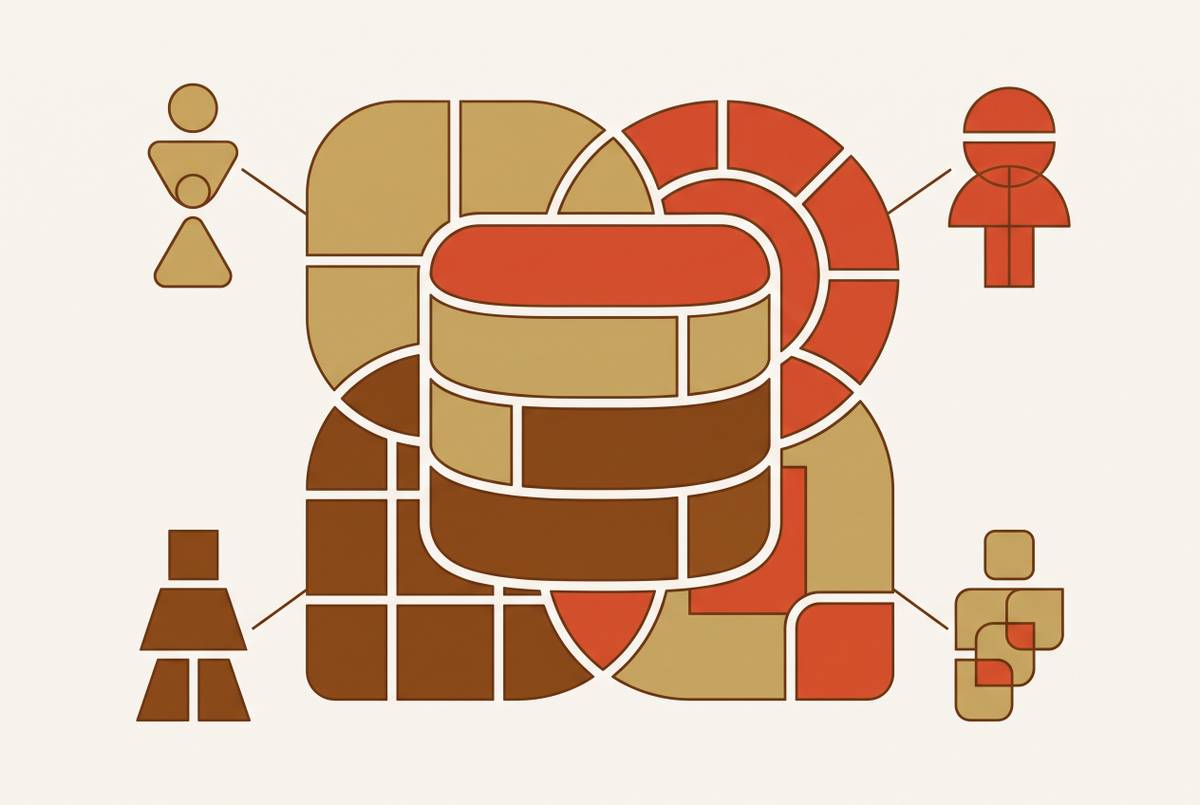
A software outage and a corrupted customer record get treated as two different categories of failure, even though both can cost a company revenue and trust. This article argues that data quality incidents deserve the same structured postmortem discipline that software reliability engineering built decades ago, and that closing the gap requires rethinking what counts as an incident, who reviews it, and how the findings feed back into prevention. The blameless, structured, action-item-driven postmortem tradition in SRE exists because informal hallway conversation after an outage never produced durable learning for complex systems. Incident.io's 2026 guide puts a number on the cost of that gap: engineers spend 60 to 90 minutes per incident reconstructing timelines from memory alone, and whoever is taking notes is usually also the person trying to fix the problem, so details get lost in real time. Worse, those reconstructed documents rarely get analyzed for patterns afterward. The same failure can recur without anyone noticing it's the second or third time. The consequences compound now that so much of this data feeds directly into AI-driven workflows: a bad table used to just break a dashboard, but today it corrupts model inputs, and the resulting errors can propagate silently through automated systems long before a human catches them.
What qualifies as a data quality incident
Software engineers know an incident when they see one: a service goes unreachable, latency spikes past a threshold, an alert fires and pages someone. Data quality failures rarely announce themselves that way. A field gets silently overwritten with a stale value, a duplicate record gets created by an automated enrichment step, or a schema drifts for days before a downstream report finally looks wrong enough for someone to ask why. The absence of a clear trigger is the first reason data teams struggle to adopt postmortem discipline: there's no equivalent of a page firing at 2 a.m.
The SRE severity framework offers a starting point for translating software's incident logic into data terms. Hyperping's guide ties review requirements to severity: customer-facing outages and internal service degradations always get reviewed, near-misses that carry systemic risk get reviewed, and chronic minor issues get reviewed once a pattern becomes visible. Applied to data, the same scaling logic holds. A single CRM record with the wrong job title isn't an incident worth a formal review. A batch enrichment job that overwrites correct job titles across thousands of records is, because the threshold that matters is scope, downstream dependency, and whether the bad data feeds an automated system or a model rather than just sitting in a spreadsheet.
A newer wrinkle makes that threshold harder to apply than it sounds. Research on RevOps AI agents found that nearly half of enterprise RevOps leaders had no visibility into which agents were actively touching their records. If a team can't see which automated process modified a field, it can't tell whether an error crossed the threshold into incident territory, and it certainly can't attribute the error to a cause once a postmortem is called. That visibility gap will resurface later in this piece, because it's also the biggest obstacle to closing the loop between a postmortem's findings and the monitoring that should prevent a repeat.
Business data also decays on its own, without any single event causing it: job titles change, companies move, phone numbers and email addresses go stale. Left unmonitored, that decay amounts to a continuous, low-grade incident that never crosses a threshold high enough to trigger a formal response. Teams need a working definition of "incident" rather than waiting for one dramatic enough to be obvious.
Who owns the data quality postmortem
Software incident response assigns ownership by design. Hyperping's guide specifies that naming a postmortem owner is the Incident Commander's first task once the fire is out, usually handed to whoever has the clearest memory of the timeline or the deepest knowledge of the system involved, and the owner's job (writing the draft, running the review meeting, assigning action items) is kept distinct from the roles contributors and leadership play. That structure doesn't exist by default anywhere in most data organizations. Sales assumes marketing will clean records before a handoff, marketing assumes RevOps will standardize field formats, and RevOps assumes reps are entering data correctly in the first place. Every team is confident someone else is responsible, and the predictable result is that dirty records accumulate for months because no single team actually owns the outcome.
Meltwater's experience shows what's recovered once that ownership gap closes. When its RevOps team finally took explicit responsibility for data quality, the team merged thousands of duplicate leads, properly assigned thousands of accounts to the right owners, and cut MQL-to-SQL conversion time by three-quarters. That wasn't a cleanup exercise run for its own sake. It was a revenue recovery effort, and it only became possible once someone was named accountable for the outcome rather than everyone being generally responsible for it.
The fix borrows directly from SRE practice: name a data steward or RevOps owner for each domain, with that ownership written into the postmortem template itself so that action items route to a specific person rather than disappearing into a team alias. That assignment makes the postmortem organizationally possible. Contributors still matter in this model the same way they do in SRE: incident responders, the owners of the affected systems, and the customer-facing teams who felt the downstream impact all carry context the postmortem owner needs. A data quality postmortem should pull in whichever teams depend on the affected data, not just the data engineering group that runs the pipeline, but the review still needs one named person driving it, not a committee.
The blameless principle adapted for data: keeping psychological safety intact without dissolving accountability
The blameless postmortem exists in SRE because it encourages engineers to document what actually happened rather than a defensible, sanitized version of events, and that honesty is what makes the system learn anything at all. Hyperping's guide grounds the approach in Sidney Dekker's Just Culture framework, describing it as "an atmosphere of trust where people are encouraged to provide safety-related information, but clear lines are drawn between acceptable and unacceptable behavior," and it draws a sharp line between blame, which it treats as counterproductive, and accountability, which it treats as essential.
That distinction is harder to hold onto in data organizations, because a bad batch of records prompts the first question anyone asks to be "who entered this?" Dwelling on that question is the wrong instinct, and the language used in the postmortem is what prevents the review from collapsing into it. SRE postmortems write "the deployment process allowed production changes without review" rather than "John deployed without review." Data postmortems can follow the same pattern: "the enrichment workflow allowed overwrites without field-level locking" instead of "the SDR imported bad data". The rewrite isn't softening the finding; it's naming the actual point of failure, which is the system that let the error through rather than the person who happened to trigger it.
Blameless culture and individual accountability are compatible, once accountability is understood to attach to the fix rather than to the narrative of what went wrong. A team can write an honest, unflinching account of how a batch job overwrote thousands of correct values, and still hold someone accountable for shipping the field-level lock that prevents it from happening again. Those are two different acts, and confusing them is what makes teams either too soft on systems or too hard on people. One further caveat carries over directly from SRE: the "five whys" method of chasing a single root cause has fallen out of favor among reliability engineers because complex systems fail through networks of contributing conditions, not a clean chain of causes. Data quality incidents are just as multi-causal, and a postmortem that stops at the first plausible explanation will miss the systemic fix that actually prevents a recurrence.
The Postmortem Document for a Data Failure
The SRE postmortem template gives a reliable skeleton: a timeline of events, the contributing factors, an assessment of impact, and action items with named owners and due dates. A data quality postmortem keeps that same skeleton but needs several additions specific to how data fails.
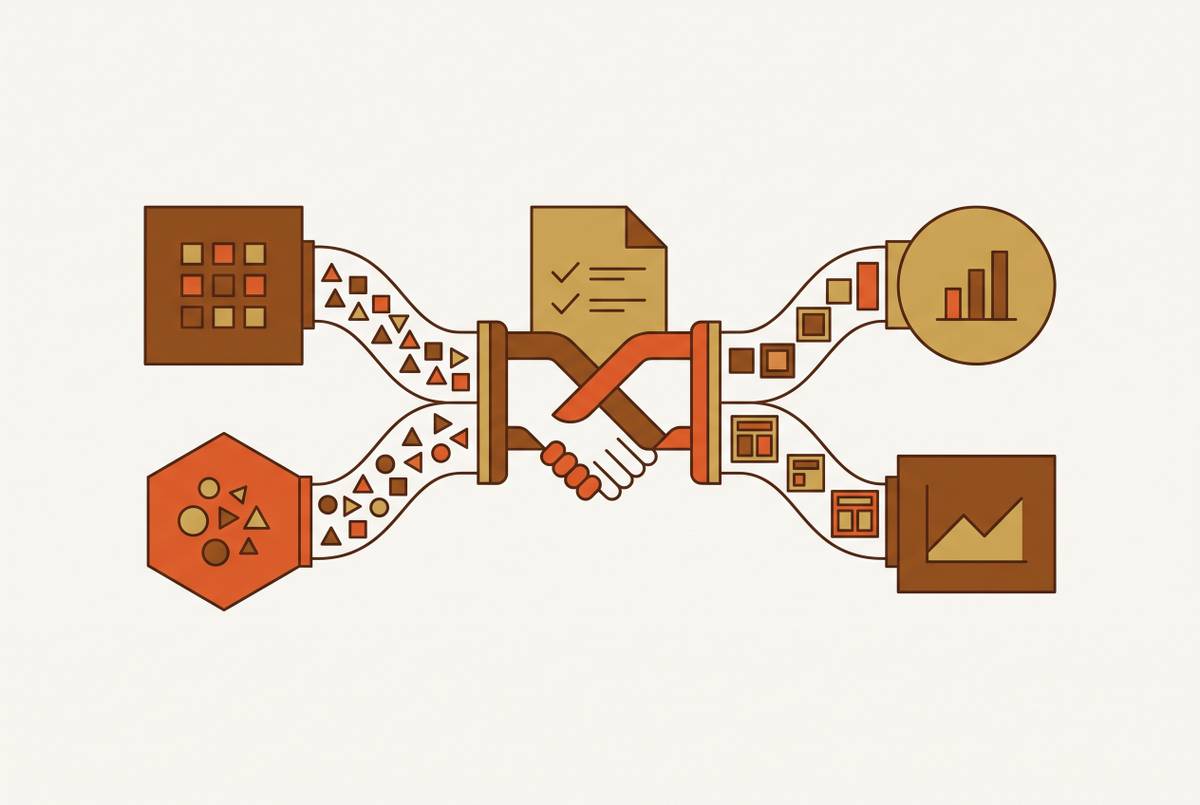
Data lineage has to be documented explicitly: which upstream source produced the bad data, which downstream systems consumed it, and how far the blast radius actually extended, whether that means a dashboard someone presented to a client, a model trained on the corrupted records, or outbound sequences that fired against contacts whose information had already gone stale. Detection lag needs its own line in the document: the gap between when the bad data entered the system and when someone caught it. This is the data equivalent of MTTD (mean time to detect), and it's often the most actionable metric for prevention. The postmortem should also record how the issue was actually caught, whether a monitoring rule flagged it, a data quality check failed, a downstream team noticed something odd, or a customer complained, because the later in that sequence detection happens, the more urgent the case for building earlier checks. Finally, the document should specify exactly which fields were affected, what those fields feed downstream, and whether the mechanism was schema drift or value-level corruption, since the fix looks different depending on which one occurred.
Incident.io's 2026 guide names four metrics that indicate whether SRE postmortems are actually working: time to publish, the rate at which action items get completed, the rate of incident recurrence, and the trend in mean time to resolution. Each has a direct equivalent in data: how quickly the postmortem gets written after containment, how many of the resulting fixes actually ship, how often the same category of data error comes back, and whether detection lag is shrinking over time. The hardest practical obstacle to filling in any of this is that a service outage comes with automatic, timestamped monitoring data, while a corrupted field often has no record at all of when the bad value was written. Without automated audit trails and field-level change logs, the timeline section of a data postmortem is reconstructed from memory just like the rest of it, defeating the purpose of writing one down.
How AI changes postmortem production speed and archive pattern detection
AI contributes to postmortem culture in two distinct ways worth keeping separate: speeding up the production of any single postmortem, and finding patterns across a whole archive of them that no individual reviewer would ever spot.
On the first point, incident.io's buyer's guide identifies the underlying mistake: teams treat the postmortem as a writing assignment, when it's really a data capture problem. If the context gets captured automatically while the incident is happening, the work afterward becomes analysis instead of archaeology. Using that approach, incident.io reports drafting postmortems in 15 minutes from data gathered in real time.
The second contribution matters more for data quality specifically. Zalando's 2025 engineering blog post is the clearest demonstration of what pattern detection across an archive can find. The traditional approach to incident review worked fine for learning from a single event right after it happened, but Zalando found it "does not work well for retrospective analysis of years of past incident reports at company scale". When the company applied a large language model to its full postmortem archive, recurring failure modes across its datastores, and the investment opportunities those patterns implied, became visible for the first time, patterns that had been sitting invisible across years of individual reviews. A single data quality postmortem is a useful document about one incident. A year's worth of them, mined for recurring sources of bad data, recurring affected fields, and recurring detection lags, is where the fixes that actually change the system emerge. That's the real argument for investing in postmortem culture in the first place: the returns from any one review are modest, but they compound across the archive once there's enough material to mine.
The next step past mining the archive is anticipating the failure before it happens. Machine learning models built to watch for skewed partitions, schema drift, or resource bottlenecks can flag a likely pipeline failure along with a recommended fix rather than just a notification. That's a move past learning from postmortems into systems that reduce how often incidents occur in the first place, rather than just documenting them faster once they do.
What closing the loop requires after a data postmortem
The most common objection to investing in postmortem tooling is also the most damning: teams buy the software, adopt the template, and never enforce either one. The stack changes; the habits don't. Six months later, the result is a partially configured tool that nobody uses consistently and a business that looks exactly the way it did before the purchase.
Incident.io's buyer's guide names the two metrics that expose whether a postmortem culture is real or performative: the rate at which action items actually get completed, and the rate at which the same incidents keep recurring. If action items pile up unresolved while the same failures keep recurring, the postmortem has become theater rather than learning, regardless of how thorough the document itself reads. Specificity in the action item is what separates the two outcomes. Cloudflare's postmortem for its June 2025 outage is held up as a model specifically because its remediation commitments came with concrete dates attached, not vague promises to "look into it". A named owner, a real deadline, and an outcome that can actually be tested are what make an action item enforceable instead of aspirational.
For data quality specifically, recurrence prevention requires the action items to land in the detection layer itself, reshaping the automated checks rather than just a revised process document. The useful output of a data postmortem is a new monitoring rule, a new automated check, or a new field-level constraint that makes the same failure harder to repeat without anyone noticing. Hyperping's guide frames the whole mechanism as a loop: incident, postmortem, action items, trend analysis, fewer future incidents. Most teams handle containment well and fumble everything that's supposed to happen after it, and that fumble costs more in a data context than it does in software, because AI-driven workflows amplify a bad input rather than flagging it as suspicious. None of this closes without the governance piece from earlier in this argument: a named data steward or RevOps owner has to be the one tracking whether action items actually get closed, because without that accountability, the postmortem archive keeps growing while nothing about the system actually changes.
Building a postmortem culture that prevents the next incident rather than documenting the last one
The mature version of this practice looks like an organization where postmortem findings drive the monitoring configuration directly, rather than sitting in a document nobody revisits. Every detection lag identified in a review becomes a new automated check built to catch that specific failure earlier next time. Every recurring failure mode that a mined archive exposes, the way Zalando's did, becomes an argument for an architectural fix rather than another round of manual cleanup. Continuous data quality monitoring, built on the lineage tracking, the ownership structure, and the action item discipline described throughout this piece, turns a postmortem from a record of what already happened into the mechanism that keeps the next version of it from happening.
Sources
- Best incident postmortem software: Complete guide for 2026
- How to choose incident post-mortem software: 2026 buyer's guide for SREs
- Incident post-mortems: the complete, blameless guide
- Zalando Engineering Blog - Dead Ends or Data Goldmines? Investment Insights from Two Years of AI-Powered Postmortem Analysis
- Which Incidents Need a Postmortem? Severity, Impact, and Near Misses
- Google SRE - Blameless Postmortem for System Resilience
- Data Quality Incidents: Detection, Response, and Prevention
- What Is an Incident Postmortem? Definition and Key Benefits