Business Risk of Undocumented Data Schema Changes
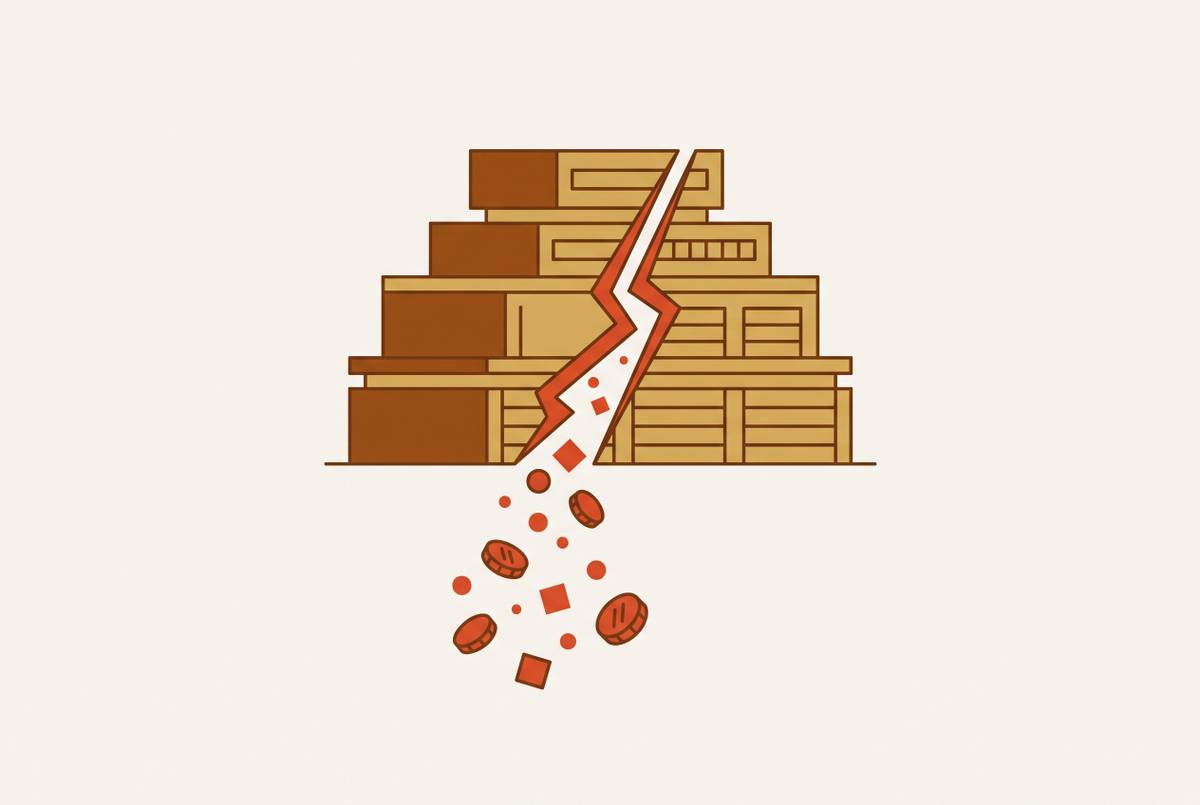
Silent schema changes corrupt data for months before anyone notices.
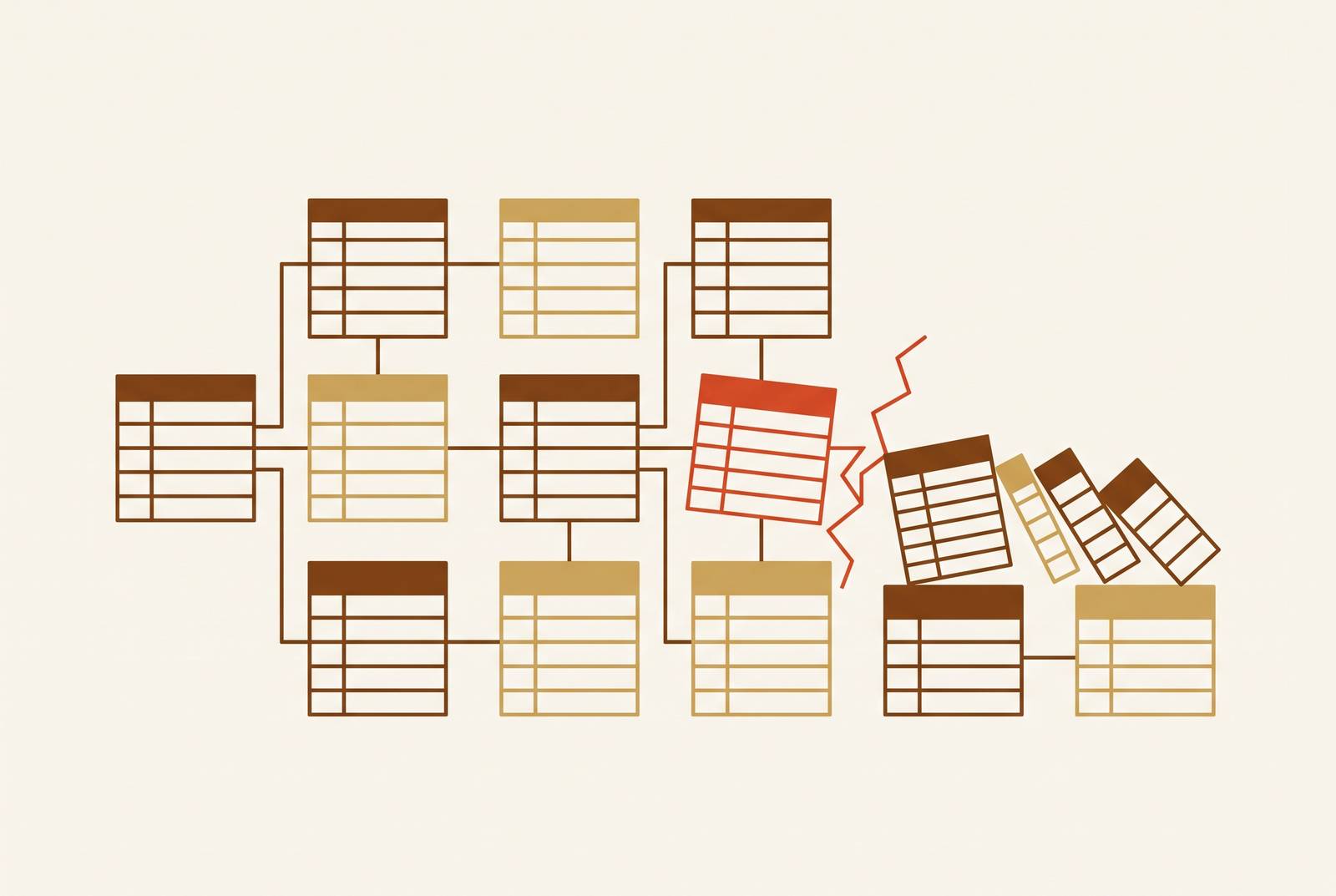
A schema change that crashes a pipeline gets fixed within the day. A schema change that doesn't crash anything can run for months before a single person notices, and by then it has touched every report, model, and decision built downstream of it. That asymmetry is the entire problem. Renaming a column, altering a data type, dropping a constraint: none of it costs anything to introduce, and none of it leaves a mark when nobody documents it. The pipeline keeps running. The dashboard keeps populating. Confidence in the data holds steady while the data underneath it has already gone bad.
What opens up is a gap between what the system reports and what's actually true, and that gap doesn't stay fixed in size. It widens, because every new process, every new model, every new report gets built on top of the same corrupted foundation. Enterprise teams evaluating their AI risk surface have started to notice the pattern: when asked what actually threatens their AI programs, the answers that come back aren't about model architecture or training technique. None of them are model problems. They're schema problems wearing a model's clothing.
This isn't a one-off failure mode that happens when someone gets careless. Source systems accumulate undocumented transformations, implicit type coercions, and legacy workarounds over years of continuous operation. Drift is closer to a structural feature of long-running data infrastructure than an accident. The rest of this piece traces what that silence actually does, from the moment it corrupts a column to the moment it becomes a regulatory filing nobody wanted to write. Per the 2026 State of Database Change Governance Report by Liquibase, the top AI-related risks enterprise teams identify are not model problems: they are data quality issues, ungoverned AI-generated SQL, regulatory non-compliance, and schema drift, all schema-layer failures.
How Schema Drift Produces Silent Data Corruption

The mechanics matter here, because "silent corruption" sounds abstract until you see the specific way it happens. A schema mismatch, a difference in field names, data types, or relationships between a source system and a target one, can let data load without a single error while making that data fundamentally wrong. A monetary value expressed in dollars gets silently reinterpreted and stored as cents. The load succeeds. No system raises a flag. Nothing downstream knows to be suspicious, because from a technical standpoint, nothing failed.
Event pipelines fail the same quiet way. Instrumentation ships alongside a routine release, an event stops firing somewhere in the chain, and a dashboard starts showing a plausible-looking decline. It looks like a trend. It looks like something a product team should investigate for business reasons, not an engineering one, so it sits there unquestioned for weeks.
The transformation layer is where this gets expensive, because that's the stage where raw data turns into the business-aligned models that analysts and AI systems actually consume, and it's exactly where ungoverned SQL and undocumented changes compound on top of each other. In a well-run data architecture, SQL transformations get version-controlled, peer-reviewed, and tested the way application code does. Most data teams don't operate that way. That discipline is the exception rather than the baseline.
Consider the scenario industry research keeps citing as the canonical case: a model trains on a given schema in January. An undocumented change lands in February, nobody logs it, nobody tells the data science team. The model retrains in March on data that now carries different characteristics than the ones it was built around, and the outputs degrade. For weeks, that degradation reads as a modeling problem. Someone tunes hyperparameters. Someone questions the feature set. Nobody checks the schema, because nobody has a reason to suspect the schema, until eventually someone does and finds the February change sitting there, undocumented, the whole time.
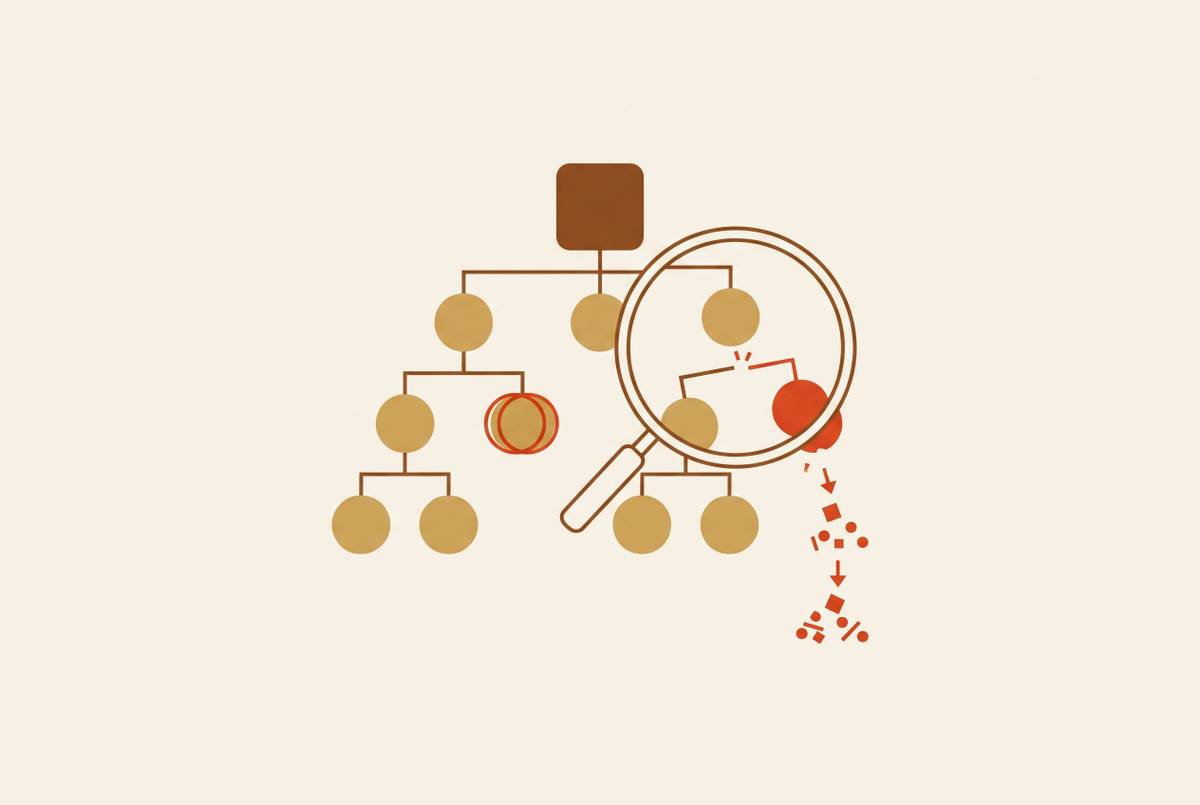
Column-level lineage is the tool that makes this traceable, tracking exactly which downstream tables and models depend on which upstream fields. It has become the standard approach for organizations that need precise impact analysis and fast root-cause tracing. But lineage only works retroactively unless it's already in place before the drift happens. Bolt it on after the fact and it tells you what broke. It cannot tell you what already went silently wrong six weeks ago.
What breaks downstream when the schema silently shifts
Modern data stacks fail across interconnected systems at once rather than in isolation. There's no single alarm for teams to catch, because there's no single failure.
Analytics pipelines are the most mechanically direct casualty. Missing even one downstream dependency during a schema change is enough to break an entire pipeline, and dependency failures of this kind count as their own distinct risk category rather than a side effect of something else going wrong. AI and machine learning systems carry a sharper version of the same exposure, because they consume data continuously, they fail silently by design (nothing in a model's architecture is built to say "this input looks wrong"), and they operate at machine scale. A small share of corrupted inputs turns into a large volume of wrong outputs before a human ever reviews a single one.
GTM and revenue teams inherit the damage at every layer of their stack. Lead scoring models that rely on firmographic fields start producing unreliable scores the moment those fields go incomplete or inaccurate, and a model that was trained on clean data will degrade in production as the CRM records it depends on decay over time. What makes this especially dangerous for revenue operations is that the usual health check, completeness, actively lies to you here. A CRM can show near-perfect field completion and still be operationally useless if the values sitting in those fields are wrong, and schema drift is precisely the mechanism that produces this false confidence. RevOps runs attribution models, territory planning, and GTM performance reporting on the assumption that CRM data is reliable; duplicates, stale lifecycle stages, and mismatched fields break those workflows and disrupt syncs across the rest of the tech stack.
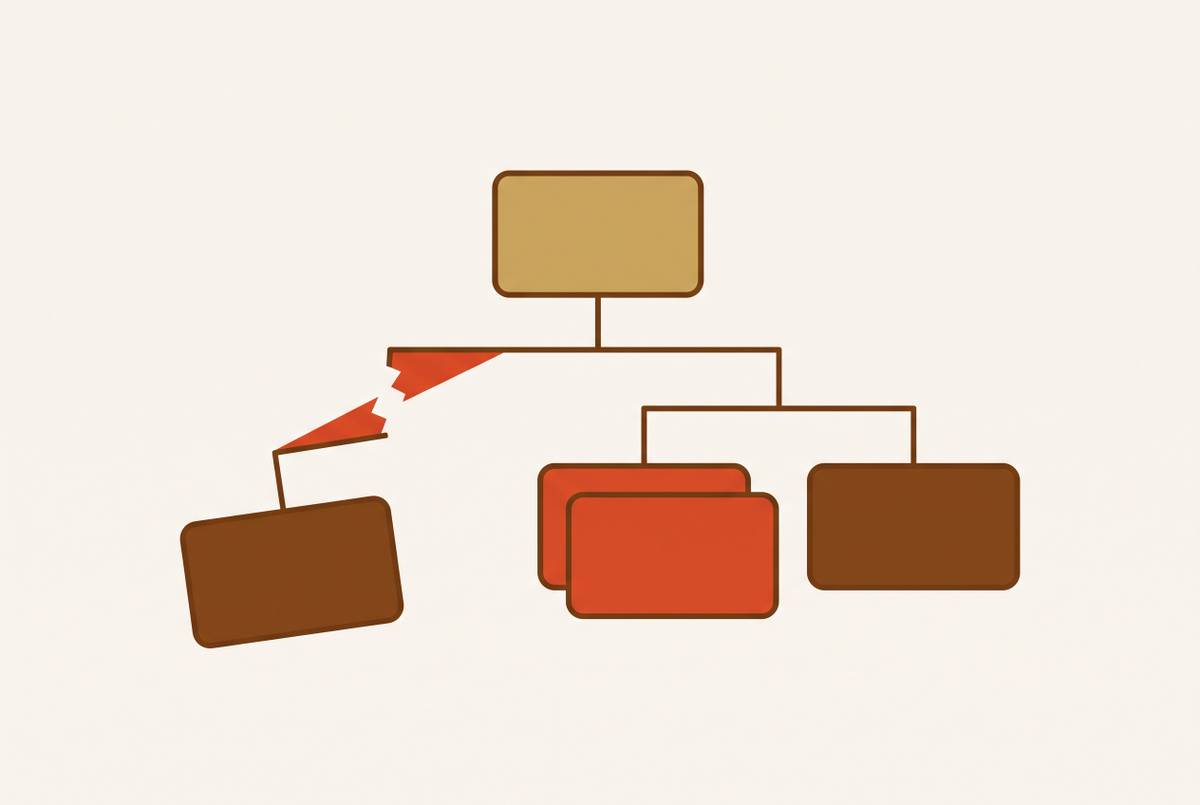
They cascade from the same upstream event. A single schema change breaks every downstream report and model still expecting the old structure, and without a maintained source of truth for what each field is supposed to mean, plus automated detection for when a source deviates from that truth, the breakage is only detected after the damage has already spread. Because modern data stacks are deeply interconnected, a single undocumented schema change can break analytics pipelines, AI models, and revenue workflows simultaneously (all without a single system-level error).
The business cost that accumulates while the problem stays hidden
The fix itself was cheap; schema drift made everything that ran on bad data before anyone noticed expensive. It's every decision, every workflow, and every AI output that ran on bad data during the interval before anyone realized something was wrong. Fixing a mislabeled column takes an afternoon. Unwinding six weeks of decisions made on top of it does not.
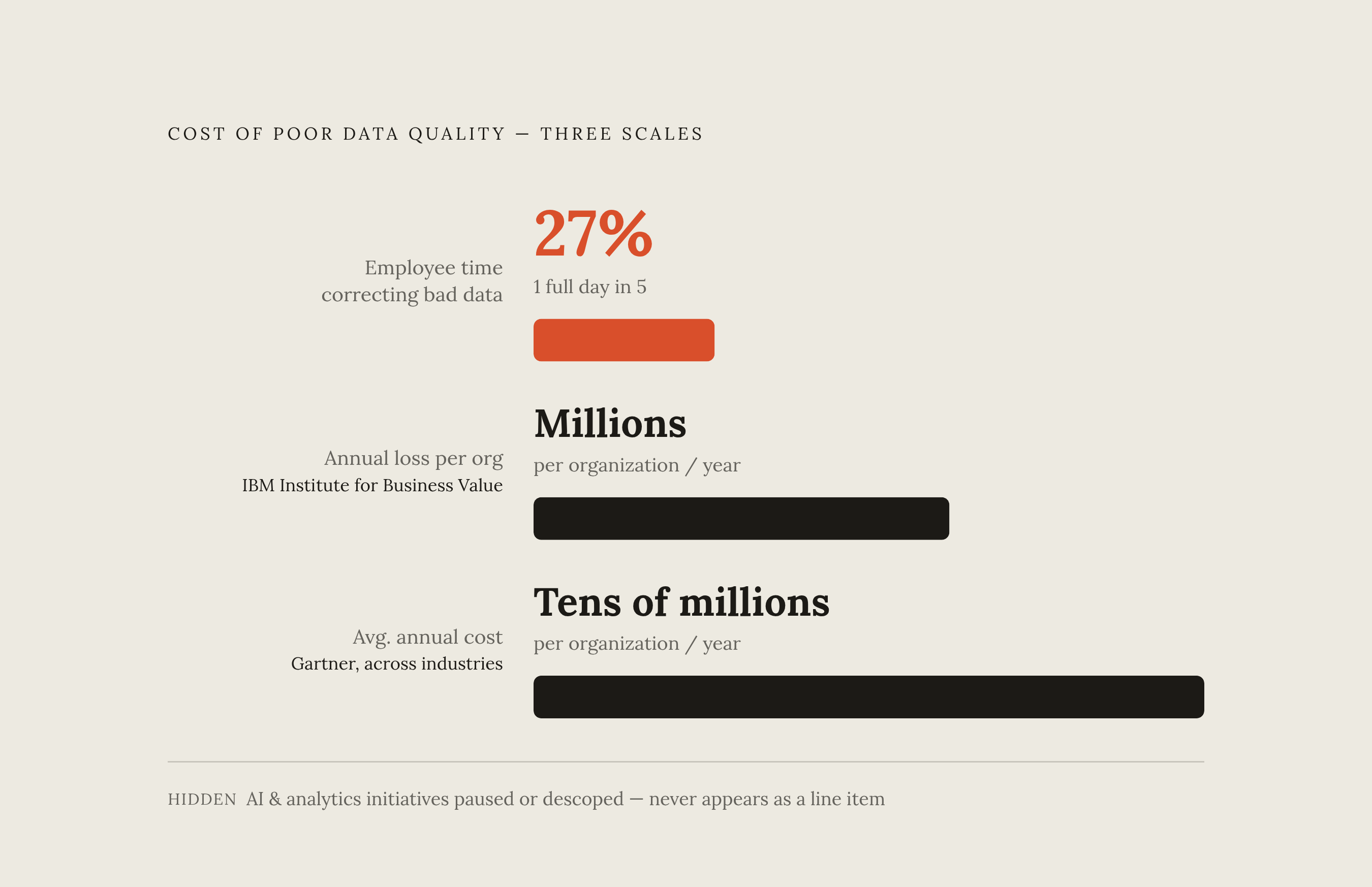
The scale of this is visible in how executives themselves rank it. A substantial share of chief operations officers now name data quality as their single most significant data priority, and organizations report annual losses running into the millions from poor data quality alone, according to an IBM Institute for Business Value report. Gartner's more recent estimates, current through 2026, put the average annual cost of poor data quality across industries in the tens of millions of dollars per organization, per year.
Some of that cost is direct and some of it is just drag. Employees spend an estimated 27% of their working time correcting bad data, time that was never meant to go toward cleanup and was instead meant to go toward the decisions the data was supposed to support in the first place. That's a substantial loss carved out of a workweek. That's more than a full day out of five spent fighting the infrastructure instead of using it.
The dimension that makes this urgent right now, rather than merely chronic, is AI. As AI investment scales inside an organization, the cost of poor data quality scales right alongside it, because every model, every agent, and every automated workflow sitting on top of drifted data inherits the underlying error and then multiplies it outward. This is where the real hidden cost lives: AI and analytics initiatives that get quietly paused or descoped because the data underneath them can't be trusted enough to ship. Industry analysis treats this opportunity cost as the largest hidden category inside most enterprise AI portfolios. It never appears as a line item. It appears instead as a roadmap that keeps slipping and nobody can quite say why.
Run the comparison the other direction and the stakes get concrete fast. Snowflake's experience working with ZoomInfo-scored accounts showed substantially higher opportunity open rates on accounts backed by clean, well-governed GTM data, a real benchmark for what's being sacrificed everywhere the underlying data can't be trusted. And the pattern repeats at the project level: most data migration projects run over budget or past schedule because of complications nobody planned for, and most of those overruns trace back to schema assumptions that were never written down in the first place.
Regulatory frameworks treating undocumented schema changes as compliance failures
Regulators have started treating undocumented data practices as though they don't exist at all, which turns schema drift from an engineering inconvenience into something closer to a legal exposure. Practices that aren't documented, or are too confusing to reconstruct after the fact, may simply be treated as nonexistent in a regulatory review, and that standard now explicitly covers data used to train AI systems or feed other decision-support applications. An undocumented schema change has become a governance liability. It's a documentation gap that a regulator can point to directly.
The penalties attached to this are no longer theoretical. Under the EU AI Act, violations of the prohibited-practices provisions can reach as high as 7% of a company's total worldwide annual turnover, a ceiling that actually exceeds the maximum set under GDPR. Privacy and cybersecurity have moved into board-level territory and become a standing category in investor due diligence. Data governance maturity, schema documentation very much included, now functions as a signal of commercial readiness rather than a box somebody checks before an audit. Enterprise teams appear to be internalizing this shift already: more than a third flag regulatory non-compliance tied to AI workloads as a top concern connected directly to schema changes, a sign that legal departments are now paying attention to a layer of the stack they used to ignore entirely.
AI compounds the risk further. When an AI system proposes and executes a schema change on its own, without an approval workflow or an audit trail behind it, the organization loses the ability to explain or prove that the change was authorized once someone asks. Add in the fact that schema mismatches are a primary trigger for data landing in systems that don't carry the same access controls or regional restrictions as its source, and you get a distinct compliance failure tied to data crossing jurisdictional boundaries it was never supposed to cross.
The limits of manual detection and alerting for schema drift at scale
Alerting systems were built for a smaller, slower version of this problem, and the volume of schema change happening across modern data environments has simply outgrown what any human-in-the-loop process can absorb. Gartner's own projection, that a majority of data management tasks will be automated by 2027, is really a statement about how badly manual oversight has already stopped scaling.
Alert fatigue is the structural failure mode here, not an incidental one. Manually tuned thresholds generate so much noise that real drift gets buried under false positives, and the team meant to be watching for the signal stops trusting the alerts. That's the argument for self-healing observability: it exists specifically because manual tuning produces this exact fatigue.
There's also a timing problem baked into the whole approach. A team that gets alerted after a schema change has already corrupted a CRM field or broken a downstream model is only documenting the damage at that point. It's measuring damage that's already done, and the entire burden of triage, root-cause work, and remediation lands on engineers after the cost has already landed on the business. Industry survey data backs this up in an unflattering way: a large majority of stakeholders report serious production issues caused by database change errors, and that figure describes environments that already have alerting in place, not environments running blind. Alerting is present in these failures. It's just structurally too late.
Effective Schema Governance and Continuous Data Reliability in Practice
Closing this gap takes an architecture built to detect, propose, and apply fixes continuously, not one that waits for a human to notice a dashboard looks off. Effective schema governance has to hold two things at once: a living source of truth describing what each field is supposed to mean, and automated detection that fires the moment any source drifts from that definition. Neither piece works without the other. A source of truth nobody checks against is decoration.
The traditional five pillars of data observability, freshness, volume, distribution, schema, and lineage, no longer cover the full risk surface for AI pipelines specifically. A sixth pillar, semantic integrity, monitors whether a field's business meaning stays consistent with what a model or agent was calibrated to expect. That distinction matters enormously. Structural checks catch a pipeline that's visibly broken. Semantic integrity catches the pipeline that runs perfectly clean while what it means has quietly shifted, which is exactly the failure mode described earlier in this piece.
Column-level lineage is the foundation that gives enterprises precise impact analysis and root-cause tracing, and it turns schema change into something visible before it turns into schema damage. On top of that foundation, tooling now exists that can detect anomalies, suggest fixes, and in some cases auto-heal data quality problems without waiting on a person, adapting automatically to schema changes and volume swings in a way that cuts down the alert fatigue baked into manually configured systems. Adoption reflects the shift: a growing majority of enterprises implementing distributed data architectures are projected to have adopted data observability tools by 2026, up sharply from a small minority in 2024, and a majority of data and analytics leaders report having already implemented data observability solutions. Metadata work has moved the same direction. AI-powered data catalogs now classify and enrich metadata automatically rather than depending on someone tagging it by hand, and that shift from passive cataloging to active governance is the infrastructure layer everything else in this section depends on.
Agentic data reliability platforms deploy specialized AI agents to continuously monitor, clean, and enrich systems of record, and can propose and apply evidence-based fixes autonomously rather than waiting for human triage. CRM and RevOps data are the sharpest test case for this, because scoring, forecasting, and attribution models all depend on that data being accurate as a baseline condition, not a nice-to-have. The payoff isn't purely technical, either. A large majority of sales reps, 92% in one CRM governance analysis, say data quality is the single biggest driver of whether they actually use the CRM at all, which means reliable schema governance pays off culturally as much as operationally, cutting down the shadow-IT habits and data distrust that tend to follow every high-profile data failure a sales team has lived through.
Sources
- AI Data Quality Risk at the Schema Layer | Liquibase Secure - Security Boulevard
- How 2026 Will Reshape Data Privacy and Cybersecurity
- Data Compliance in 2026: The Executive Playbook for US Privacy Laws and the EU AI Act
- Schema Change: How It Affects Data Quality & Reliability
- The True Cost of Poor Data Quality | IBM
- Poor Data Quality Costs $15M Annually: Hidden Business Risks
- Schema Evolution Strategies: Handling Data Structure Changes Without Breaking Pipelines - Branch Boston
- How to Improve B2B Data Quality: A 2026 GTM Guide