Runbook Design for Recurring Data Quality Issues
Standardized runbook design closes the gaps that let recurring data quality issues resurface.

Recurring data quality issues persist because teams close the specific incident without closing the detection and ownership gaps that allowed it to surface at all. The data gets corrected, the pipeline resumes, and the ticket closes, but nothing changes about how the next instance of that same issue class will be caught or assigned. A well-designed runbook is the operational artifact that forces both gaps to close.
The fixing gap is rarely the real obstacle. Data teams are generally competent at correcting a malformed field, backfilling a missing batch, or deduplicating a table once the problem has been identified. The consequence is a cycle that feels like new incidents but is in fact the same incident recurring.
The detection gap is most pronounced at the ingestion boundary. Schema changes arrive without notice, volumes shift unexpectedly, and formats evolve from the upstream producer, yet the monitoring that would trigger a response often does not exist at the point where the problem originates. Data ingestion is the most common source of data quality issues, and it is precisely the point where teams have the least visibility.
The ownership gap operates with equal force. When no single role owns a given data quality class, accountability diffuses across departments. Sales assumes marketing cleaned the records before handoff. Marketing assumes RevOps will standardize the formats. The postmortem action item goes unassigned or unverified, and everyone walks away believing someone else is handling it. The incident was addressed, but the conditions that produced it remain untouched.
Contact and account data decays continuously from job changes, corporate mergers, manual entry errors, and form fraud. A detection gap in this context is not a one-time exposure but a permanent leak, compounding quietly while the team believes the issue has been resolved.
What a runbook actually is — and what it is not — in a data quality context
A runbook is an operational contract, not a documentation artifact, and that distinction determines whether it breaks the recurrence cycle or merely records it. It is an executable operational artifact containing procedures, required inputs, preconditions, remediation steps, verification commands, and post-incident actions, all intended to reduce toil and limit mean time to recovery. What it is not is a verbose design document, an unmaintained wiki page, or a repository of tribal knowledge that has never been validated or assigned an owner.
The properties that distinguish a functional runbook from documentation are specific and testable. It must be actionable, with clear steps and expected outcomes. It must be owner-assigned, with a single team or role responsible for its maintenance. It must be verifiable, with steps validated through testing or drills. It should be idempotent where possible, so repeating a step does not cause additional harm. And it must be versioned, linked to the code or environment versions it describes.
Equally important is what a runbook is not. Confusing the two produces documents that explain what went wrong but give the next responder nothing to act on. And it is not a knowledge base article, which explains. A runbook without runnable steps and verification is a knowledge base article in disguise.
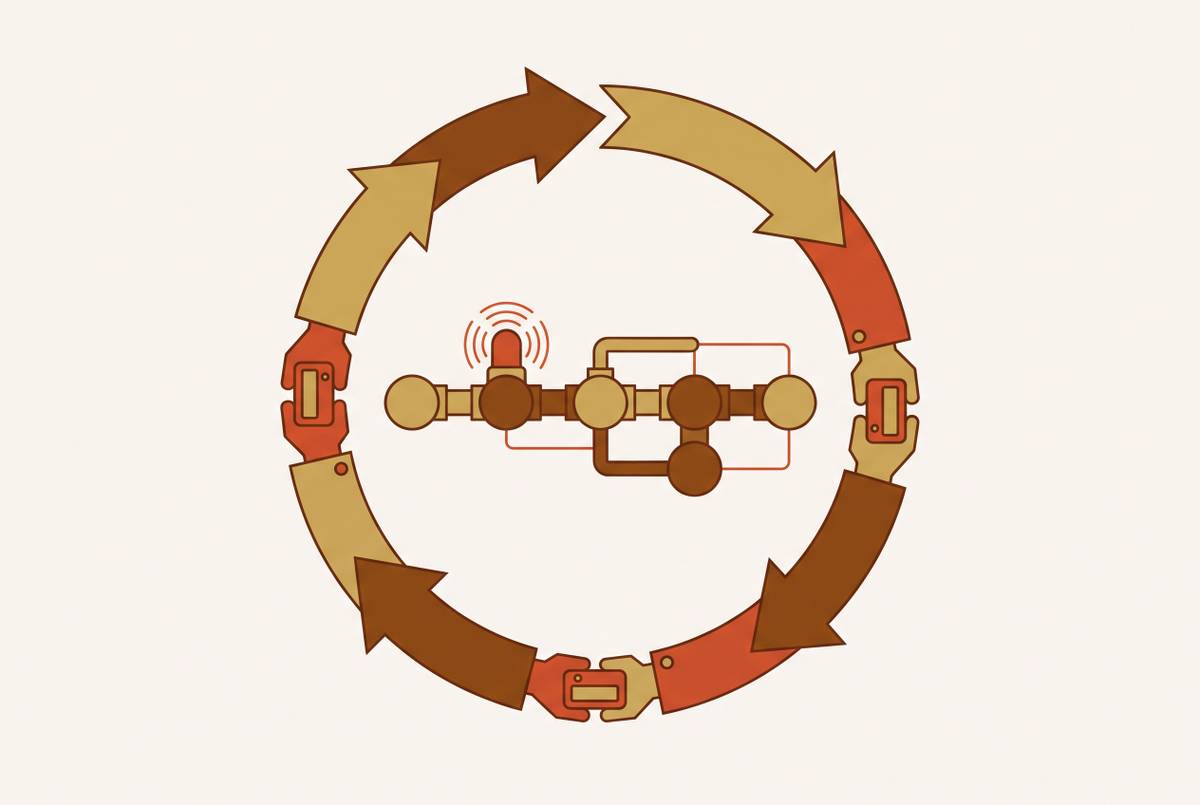
In the incident lifecycle, a runbook functions as connective tissue across all three phases. Pre-incident, it defines monitoring thresholds and links to the alerts that trigger response. During an incident, it serves as the primary source for responders. Post-incident, it feeds postmortem actions and its own improvement. It does not appear only after something breaks. It is the artifact that makes the next response faster than the last one.
In a data quality context specifically, the runbook operationalizes the answer to three concrete questions. How does one confirm this pipeline or dataset has failed? What are the most likely causes for this class of issue? And what is the step-by-step procedure to restore a known good state? Everything else in a runbook is support structure for those three answers.
The four structural elements a data quality runbook must contain to break the recurrence cycle
A runbook that does not force a monitoring change and assign a named owner for each issue class will be followed once and then ignored. Four structural elements prevent that outcome.
Element 1: A severity framework agreed on before the first incident
Even a simple three-tier scale gives responders the authority to act without escalating every decision to a committee. Severity 1 means revenue-impacting. Severity 2 means a downstream consumer is blocked. Severity 3 means quality drift has been detected but has not yet affected outputs. The critical word is "agreed": the framework must exist before the incident, not be negotiated during it.
The framework maps naturally onto service level indicators. SLIs for data quality measure latency, completeness, and correctness of critical datasets. SLOs set acceptable targets for those SLIs, and the error budget derives from each SLO as 100 percent minus the target. The severity framework is what maps specific SLO breach thresholds to specific runbook responses. Without pre-agreed severity levels, every incident defaults to "we need to discuss this," which is the organizational equivalent of having no runbook at all.
Element 2: A single named owner per issue class, not a team
The ownership gap is what transforms a one-time fix into a recurring incident. When the runbook names a team rather than a role, accountability diffuses back to zero at the next reorganization or personnel change. A single named role must own not just the runbook but the issue class it covers.
Alert routing should follow this ownership structure explicitly. The runbook makes this routing a matter of design rather than leaving it to whoever happens to see the alert first. The difference between a team assignment and a role assignment is the difference between a clear escalation path and a distributed shrug.
Element 3: A mandatory monitoring change as a runbook exit condition
A runbook that can be closed without requiring a new or updated monitor is a runbook that documents recurrence rather than preventing it. The detection gap stays open, and the next instance of the issue arrives with no earlier warning than the last one did. The runbook should specify the minimum monitoring addition required before an issue class is considered resolved. Automating schema validation at ingestion prevents malformed data from propagating downstream in the first place. Without this exit condition, a runbook is a record of what happened, not a mechanism for preventing what comes next.
Element 4: A documented list of downstream consumers for the affected dataset
Every data quality runbook should include the blast radius: which dashboards, models, workflows, or systems consume the affected dataset. Responders need to know what to quarantine and whom to notify when an issue is active, and that knowledge cannot be reconstructed from memory during an incident. This matters more as AI models and automated decision systems consume enterprise data directly, often without human review. Service level agreements require runbooks as a hard dependency precisely because the downstream consequences have grown. The downstream consumer list is what makes those decisions executable rather than improvised.
How to build the runbook for three high-recurrence data quality issue classes
The four structural elements apply differently depending on the issue class. Schema drift, duplicate records, and reference data corruption each have distinct detection signatures, ownership homes, and monitoring requirements that a generic runbook template obscures.
Schema drift from upstream producers
The detection step belongs at the ingestion boundary, not days later when a corrupted report surfaces. A schema-change alert triggered as data lands gives the team a chance to respond before the drift propagates. The owner is the data engineer responsible for the ingestion job for that source, not the source team and not a generic data queue.
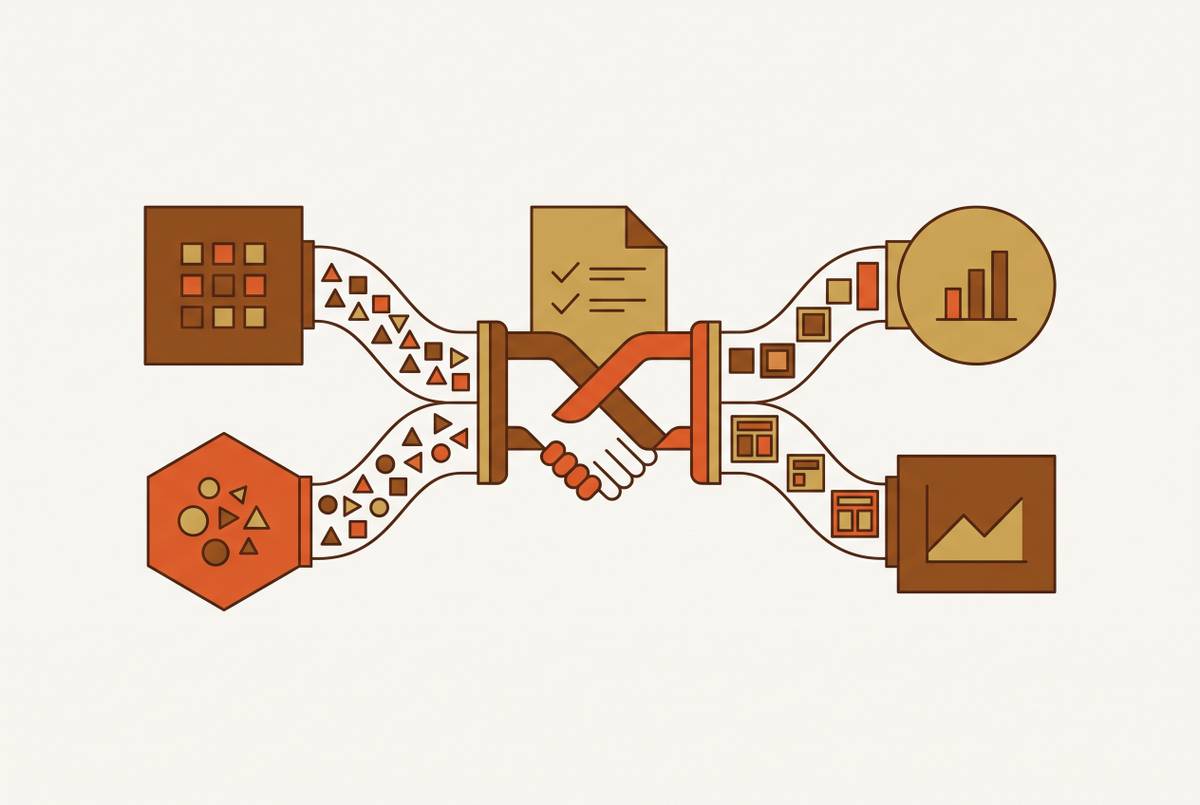
Tools that apply schema enforcement and expectation checks automatically as data arrives can warn, drop, or halt the pipeline on non-compliant records. Quarantining those records for investigation requires an explicit additional pipeline design pattern, and the runbook should specify whether quarantine or halt is the correct response for a given source based on its downstream consumers. The mandatory monitoring change before closure is a schema evolution compatibility check added to the ingestion job's CI/CD stage.
Duplicate records
The mechanism here is a lack of idempotency in ingestion jobs. Pipelines fail, retry, and produce duplicate records. The runbook for this issue class should include an idempotency check as a precondition before any rerun is authorized. The detection step is a row-count check comparing source record count to destination record count after each ingestion run, plus a deduplication scan on primary key fields. The owner is the RevOps or data steward role, not the engineer who built the integration, because the fix often requires business logic decisions about which record is canonical.
Reference data corruption
A reference table of tax codes, exchange rates, product category mappings, or territory assignments gets updated with malformed data. The corruption propagates silently to every pipeline or workflow that joins against it. Incorrect reference data can corrupt billing for an entire fiscal quarter because the blast radius is wide and the detection window is long: the reference table appears valid until a downstream consumer produces a wrong output.
The detection step is a referential integrity check on the reference table after every update, before any downstream pipeline is allowed to consume the new version. The owner is the data steward or domain owner responsible for the reference dataset, a business ownership question as much as a technical one because the canonical values are defined by business rules. The mandatory monitoring change is a pre-consumption validation gate added to every pipeline that joins against the reference table, with a quarantine path for records that fail the join.
Version control and testing requirements that keep runbooks from becoming the problem
A runbook that describes a schema, an owner, or a monitoring threshold that changed months ago is worse than no runbook at all. It sends responders down dead ends at exactly the moment they can least afford wasted time, and the operational consequence is predictable: responders bypass the runbook and improvise, which recreates the conditions that made the issue recur in the first place. Version control is therefore a structural requirement, not a preference. Runbooks should be stored alongside pipeline code in version control, linked to the code or environment versions they describe. The coupling is mechanical, and that is the point.
Testing is equally non-negotiable. Steps must be validated through testing, drills, or automation. After each real incident where a runbook was used, the runbook update is a mandatory postmortem action item, not an optional improvement.
Concision is a functional requirement. The target is the minimum number of steps required to detect, contain, and remediate the known issue class. Secrets and credentials are referenced via vaults, never included inline. A runbook that embeds credentials becomes a security liability and an outdated liability simultaneously the moment the credential rotates.
How runbooks connect to a pipeline prioritization framework — and which issues to build for first
Runbook investment is finite, and the right starting point is the intersection of business impact and recurrence frequency, not the most recent incident or the loudest stakeholder. A daily revenue pipeline feeding executive dashboards and machine learning models ranks above an infrequently used operational report. Then rank by the current frequency of incidents in that pipeline.
High-impact, high-frequency pipelines form the first tier for runbook investment. These are the issue classes where the recurrence cycle is most costly and where a well-structured runbook delivers the fastest return. If the issue recurs constantly but the consequence is low, the investment belongs in eliminating the issue at the source, not in optimizing how humans respond.
This framework also reduces alert fatigue. Data quality alerts must route to data owners and SREs with clear runbooks to reduce noisy paging. Low-priority alerts without runbooks generate noise that trains teams to ignore all alerts, which means a prioritization framework applied to runbook coverage is also a prioritization framework applied to attention.
For CRM and RevOps pipelines specifically, prioritization is driven by decay velocity and downstream AI exposure. Pipelines that feed lead scoring models, territory assignment logic, or automated outreach sequences are high-impact by definition because a quality failure there misfires automated workflows without human review. The cost of the failure is not measured in a wrong report but in actions taken by systems that had no human in the loop to notice.
Where agentic AI fits into the runbook model — and where it does not replace it
Agentic AI does not replace the runbook. Self-healing data pipelines operate on a perceive-reason-act-learn loop: continuously watching pipeline signals, evaluating decisions against governance rules, executing within defined authority, and improving from every outcome. The "defined authority" is the runbook's job to specify.
The highest-value agentic use cases require the same structural inputs a human runbook requires. Without those inputs, automation without governance creates a new class of silent failure: the pipeline runs, the agent marks success, but the health checks the agent is evaluating are wrong. That is a verified false success at scale.
DataOps reduces operational costs through automation by replacing error-prone manual processes with reliable, repeatable workflows. Automation amplifies what is already defined, and what is already defined lives in the runbook turf. The practical model splits responsibility cleanly: agentic AI handles detection and first-response for high-frequency, well-understood issue classes where the runbook already exists and has been tested. Humans retain approval authority for remediation actions that affect production data or downstream AI models. The runbook specifies which path applies.
What a complete runbook design process looks like, from first incident to continuous improvement
Building a runbook after the first incident is not enough. The runbook only breaks the recurrence cycle when it is maintained, tested, and treated as a living operational contract rather than a one-time documentation effort. The full cycle has six steps.
First, triage the first incident with future runbook authorship in mind. Document the detection lag, the actual cause, the responder's improvised steps, and the downstream consumers affected. This is the raw material of the runbook, and capturing it during the incident is far more reliable than reconstructing it afterward.
Second, write the runbook immediately after resolution, while memory is fresh. Use the four structural elements as the template: severity tier, named owner, mandatory monitoring change, downstream consumer list. Keep it short enough to be read under pressure.
Third, attach the runbook to the alert that triggers it. The monitoring system emits an alert. The alert router maps to an on-call schedule and a runbook reference. The runbook displays steps and automation buttons for the responder. A runbook that is not linked from the alert it responds to will not be found when it is needed.
Fifth, make runbook update a mandatory postmortem action. Every incident where the runbook was used produces one required output before the ticket closes: an updated runbook. This is the mechanism that keeps the document coupled to the system it describes.
Sixth, migrate well-tested runbooks to automated execution for eligible issue classes. Once a runbook has been followed successfully multiple times and its health checks are verified correct, the steps that are safe to automate can be handed to an agent. The runbook's ownership and authority structure remain the governance layer even when execution becomes automated.
The full cycle closes when the SLO breach triggers the alert, the alert surfaces the runbook, the runbook directs the response whether human or automated, and the postmortem updates both the SLO threshold and the runbook in light of what was learned. Teams that treat runbook maintenance as a mandatory output of every postmortem are the ones that actually stop seeing the same issue recur. The runbook is not a document that appears after something breaks. It is the operational discipline that makes the next incident break the pattern instead of repeating it.