Duplicate Accounts and Broken Parent-Child Hierarchies Are Costing Your CRM Its Credibility
Data fragmentation and broken hierarchies turn your CRM into an unreliable business tool.
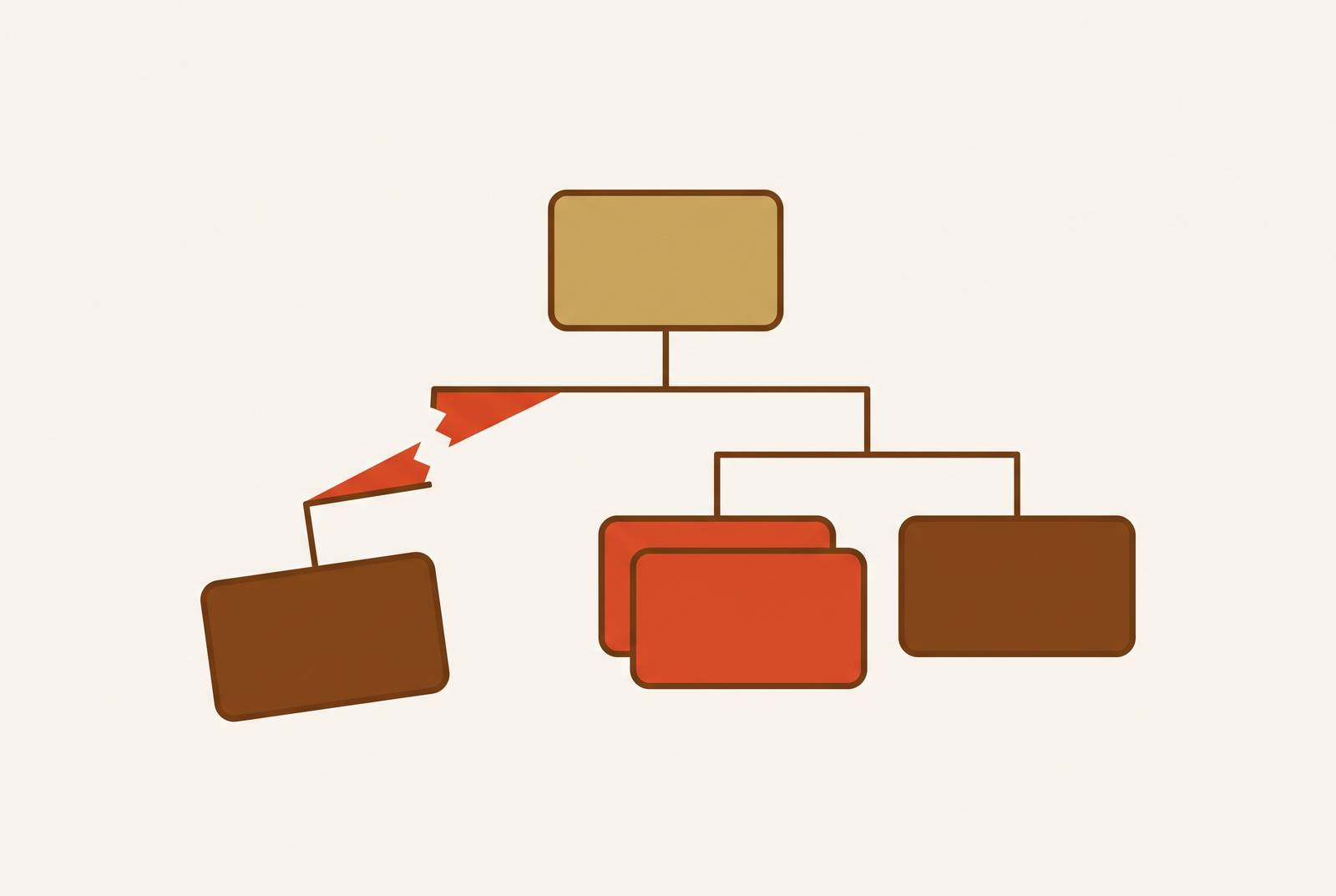
Duplicate accounts and broken parent-child hierarchies are not two separate data hygiene problems that happen to show up in the same CRM. They are a single compound failure: duplicates fragment the record of a company, and broken hierarchies strip away the one structure that could have caught the fragmentation before it spread. Each failure accelerates the other, and the result is a CRM that cannot answer basic questions about who a customer is, what a customer owes, or who inside the company owns the relationship.
How duplicate accounts and broken parent-child hierarchies produce a compound failure
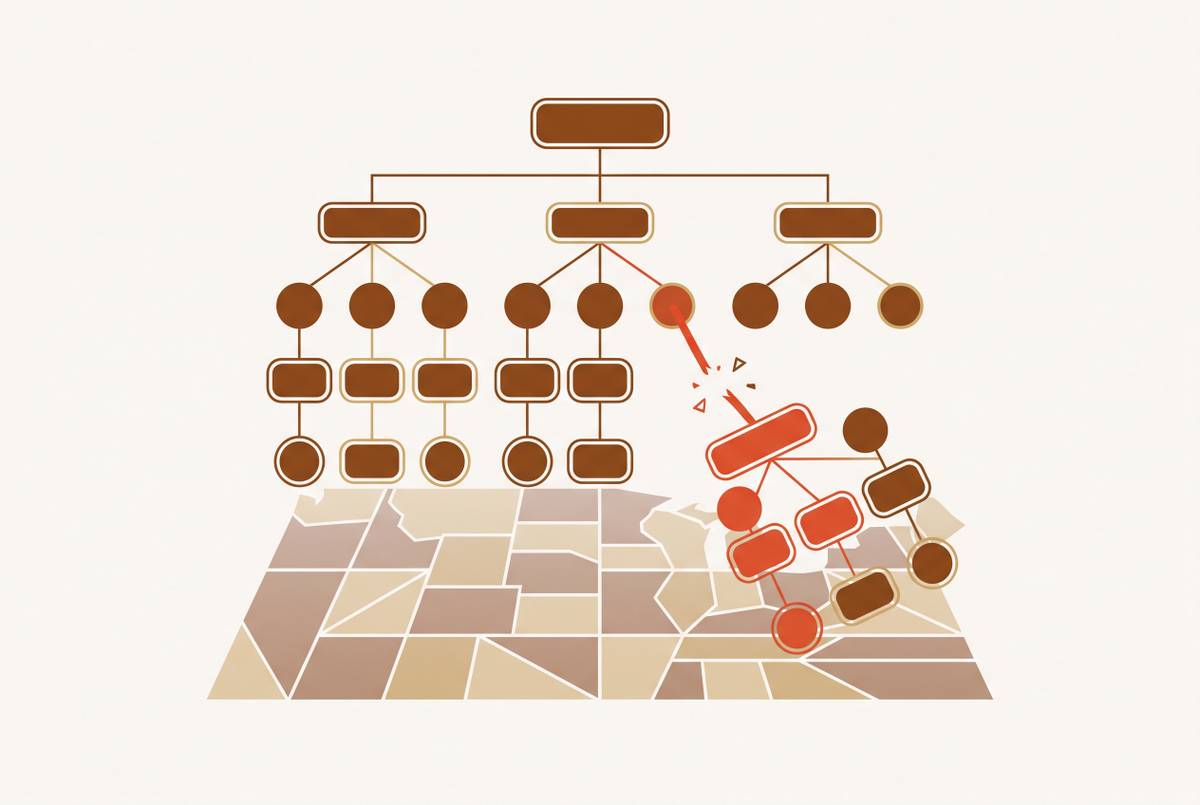
A duplicate account splits the record of one real company into two or more partial ones. Activity history lands on one record, enrichment data lands on another, and revenue figures get attached to whichever record happened to close the deal. None of this would be fatal on its own if the CRM had a reliable way to recognize that the fragments belong together. That is what a parent-child hierarchy is supposed to do: link a subsidiary to its ultimate parent so the system can roll up exposure, revenue, and risk across the full corporate family. When that link is missing or wrong, the CRM has no mechanism left to reassemble what the duplication broke apart.
The two failures feed each other in a loop that gets worse with time. A company enters the CRM twice, often through two different integration points capturing the same business under slightly different names or domains. Because there is no dependable parent-child structure to anchor either record, no automated check flags that both should resolve to the same parent entity. Left alone, both records start accumulating their own history: their own child accounts, their own activity logs, their own open pipeline. Every new record added to either branch makes the eventual untangling harder, and the hierarchy fractures a little further each time.
Databar's account of how this actually happens in practice is instructive: list imports, webinar registrations, Calendly bookings, and CRM-to-CRM migrations each generate their own version of the same person or company. Each integration channel operates independently, with no shared check against the others, so without real-time duplicate detection sitting across all of them, every channel adds to the mess on its own schedule. A sales team importing a trade show list, a marketing team syncing webinar sign-ups, and an ops team migrating records from a legacy CRM can each introduce a version of the same account in the same week, and nothing in a standard setup forces those three versions to recognize each other.
Why CRM data decays faster than any static cleanup can track
The conditions that produce duplicates and break hierarchies run all the time, not once in a while. That single fact is what makes this a rate problem rather than a backlog problem, and it is why a database can pass a cleanup audit and still be unreliable again within months.
Every integration channel connected to the CRM, marketing automation, webinar platforms, web forms, calendar booking tools, keeps generating duplicate candidates whether anyone is watching or not. None of these systems pause while a data team runs a dedupe project. Corporate change adds a second, independent source of damage: acquisitions, rebrands, and restructurings all require mass updates to parent-child links across potentially thousands of records at once. Those bulk updates frequently fail partway through, hitting batch timeouts or limit errors across what are really many separate transactions bundled together, and the result is a hierarchy left in a half-migrated state, with some subsidiaries correctly repointed to a new parent and others still hanging off the old one.
A database that passes a cleanup audit in the first quarter of the year will have re-accumulated meaningful duplication and hierarchy drift by the third quarter if nothing is watching the system in between. The faucet does not turn off just because someone mopped the floor.
Native platform tooling was not built to solve this kind of standing problem. Analysis of Dynamics 365 CE shows that native duplicate detection is designed to catch a record at the moment it enters the system, not to give an ongoing picture of what has already accumulated inside it. Bulk detection jobs cap out at a limited number of records per run, so getting a full picture of an enterprise dataset means stitching together multiple runs by hand, a task that almost no team repeats on a regular schedule. Most organizations cannot say, with a specific number, how many duplicates sit in their CRM right now. They can offer a range at best, and a range cannot be prioritized, budgeted, or put in front of a leadership team as something to fix.
What the fragmentation costs across sales, marketing, service, and leadership
This cost appears most clearly in the finance meeting, not the sales floor. One breakdown of duplicate account costs describes the moment a CFO sees the same customer appear three times in a quarterly review, each time with a different revenue number attached. The honest explanation, that the company has four records for this customer and each department pulls from a different one, is the kind of sentence that ends budget meetings rather than resolving them.
That single moment captures a tax that gets paid across every function touching the CRM, and the costs stack rather than staying contained in one department's budget. Sales reps working the same account from different records duplicate outreach at best and create visible conflict in front of the customer at worst, with two reps from the same company both pitching the same buyer unaware the other exists. Pipeline totals inflate because the same opportunity can sit on more than one record, so the forecast leadership works from is wrong before anyone makes a single decision based on it. Marketing wastes send budget and distorts attribution when the same contact receives the same campaign under two separate records, and when consent gets tracked on one record while sends go out from another, the gap becomes a compliance exposure. Service may be the most visible failure to the customer directly: case history split across records means the agent on the phone sees half the story, the customer has to repeat themselves, and the company looks disorganized at the exact moment it is trying to look reliable.
Broken hierarchies add a distinct failure mode on top of duplication. When the parent-child link between a subsidiary and its parent is wrong or missing, territory assignment breaks along with it: a mid-market rep ends up working a deal that should belong to the enterprise team covering the parent account, straining the relationship and setting off an internal fight over ownership that has nothing to do with the customer.
Leadership absorbs the cumulative version of all of this. Once pipeline and revenue rollups can no longer be trusted, the CRM investment itself loses credibility, and teams start building workarounds: exporting to spreadsheets, rebuilding reports in side tools, creating exactly the kind of shadow system the CRM was purchased to eliminate. None of this requires precise statistics to add up to real money. A conservative estimate of one wasted hour per duplicate cluster per quarter, spread across sales and service at loaded labor cost, produces an annual figure that rarely comes in under six figures even for a mid-size dataset with only a modest duplication rate.
AI Deployment as a Strategic Liability for Dirty Account Data
A human sales rep working a duplicate record has instincts that catch some of the damage before it compounds. The activity history looks thin, the contact's name doesn't ring a bell, something feels off, and the rep hesitates. An AI outreach agent has no such instinct. It processes every record in its queue and generates personalized outreach based on whatever is sitting in that record, stale, fragmented, or duplicated, with no built-in sense that something looks wrong.
Account hierarchy carries outsized weight in AI-driven go-to-market systems specifically because so many of them depend on it to make basic decisions. AI SDR agents, predictive scoring models, and account-based marketing platforms all use parent-child relationships to figure out which contacts belong together, where an intent signal should get attributed, and which sales team actually owns a given relationship. When the hierarchy is broken, every one of those signals routes to the wrong place, and the system has no way to know it made an error.
Predictive scoring compounds the same mistake at the account level. A model trained on a CRM where one company appears as three separate accounts will score those three fragments as three separate opportunities, misallocating sales attention across records that should be a single, larger account, and systematically underestimating how much revenue or risk is actually concentrated in that one customer.
The write-back features now common in Copilot-style AI tools raise a further concern. In the context of Dynamics 365 CE and Entra Agent ID, governance tooling controls what an agent is allowed to access and how its identity and permissions are scoped, but that governance layer has nothing to say about whether the data the agent is writing back is accurate or free of duplication. An agent can be fully authorized and still be feeding bad data straight back into the system of record.
AI deployment does not make dirty CRM data a problem to deal with eventually. It makes clean account data an immediate prerequisite, because any AI initiative launched on top of unreliable records inherits that unreliability and then scales it, at machine speed, across every account it touches.
What the faucet-still-running problem demands instead of periodic deduplication campaigns
A one-time deduplication project or an annual hierarchy audit starts decaying the moment it finishes, because the processes that created the mess in the first place keep running. The cleanup addressed the symptom sitting in the database on the day the project ran. It did nothing to the integration channels, migration jobs, and corporate restructurings that keep generating new duplicates and new broken links every day after.
The mismatch is structural. A deduplication campaign is a single intervention applied to a database that keeps receiving new records from multiple channels continuously. Within weeks of clearing the merge queue, new duplicates start arriving from the same sources that produced the last batch. Hierarchy rebuilding runs into the identical wall: a parent-child structure corrected by hand gets rewritten by the next API integration, the next CRM migration batch, or the next acquisition, because the parentage keeps getting rewritten underneath it, so rebuilding the hierarchy once never holds.
A durable program, as practitioners have documented it, needs three layers working together instead of one cleanup sprint repeated occasionally: preventing new duplicates with detection rules at the point of creation and stricter validation on the web forms and import channels that generate the most noise, detecting what has already slipped through with a scheduled matching job that a named steward actually owns, and merging records in a way that preserves the losing record's activity history and connections. Most organizations are not set up to run this as an ongoing program. A large share have defaulted to manual cleanup rather than building a structured, continuous data-quality process, which is a direct mismatch with how continuously the underlying problem regenerates itself.
Buying enrichment data to fix a broken corporate family tree treats the same symptom from a different angle. A new vendor's version of account hierarchy gets written into the same parent field that was already being overwritten by the last integration, and fresh data poured into a broken governance structure produces a hierarchy that looks clean for a while and then breaks again by the same mechanisms that broke it the first time. Continuous scanning and structural detection, the approach taken by AI-powered data reliability platforms like Quill, exists precisely to catch the duplicates that slip through integration channels and to surface the full scope of hierarchy drift as it happens, rather than waiting for the next scheduled audit to reveal how bad things have gotten. The fix is a system built to detect and propose corrections continuously, without waiting on a human to notice the problem and schedule time to look at it.
What continuous, agentic remediation looks like for account data
Restoring credibility to a CRM means replacing the scheduled-cleanup model with a system that watches account data continuously, surfaces fixes backed by evidence as problems appear, and, where appropriate, applies those fixes on its own rather than waiting for a steward to triage a backlog.
That kind of system operates in three layers. The prevent layer catches duplicates at the moment a record is created, using domain-based checks before entry, form validation, and matching logic that runs across integration channels. The detect layer runs continuous matching across the entire account database, flagging fuzzy matches, missing parent-child links, and hierarchy inconsistencies as they occur, so someone no longer has to run a report to find them. The remediate layer turns those flags into evidence-based fix proposals that a steward can approve or, for lower-risk cases, that an agent can apply directly, preserving the losing record's history and connections rather than discarding them the way a naive merge would.
Hierarchy work demands a particular kind of capability that fuzzy name-matching alone cannot provide. Recognizing that two accounts should sit under the same parent requires understanding something about corporate structure itself: who owns whom, what changed in a recent acquisition, which subsidiary rolls up where; comparing how similar two account names look on the surface is not enough. The system needs to reason about the relationship between entities, not just compare field values side by side.
Because the conditions that create duplicates and hierarchy breakage never stop, active integration channels running continuously in the background, corporate restructurings forcing mass updates that often fail partway, the database keeps deteriorating between cleanup events no matter how thorough the last one was. Only ongoing, autonomous detection and remediation can keep pace with that rate of decay, which periodic audits and manual stitching were never built to match. Unreliable CRM data is a business risk with consequences that reach well past the database itself: it corrupts the forecasts sales leadership relies on, misfires the workflows built on top of it, and misleads the dashboards executives use to make decisions. Data reliability in systems of record has become a baseline requirement.
The target worth aiming for is a CRM where duplication rate and hierarchy integrity get reported as standing operational metrics, sitting right alongside pipeline and revenue, because those two numbers are the precondition for trusting every other figure the CRM shows.