Maintaining Accurate Account Hierarchies in Salesforce Before They Break Your Territory Model
Clean account hierarchies require constant maintenance, not one-time setup.
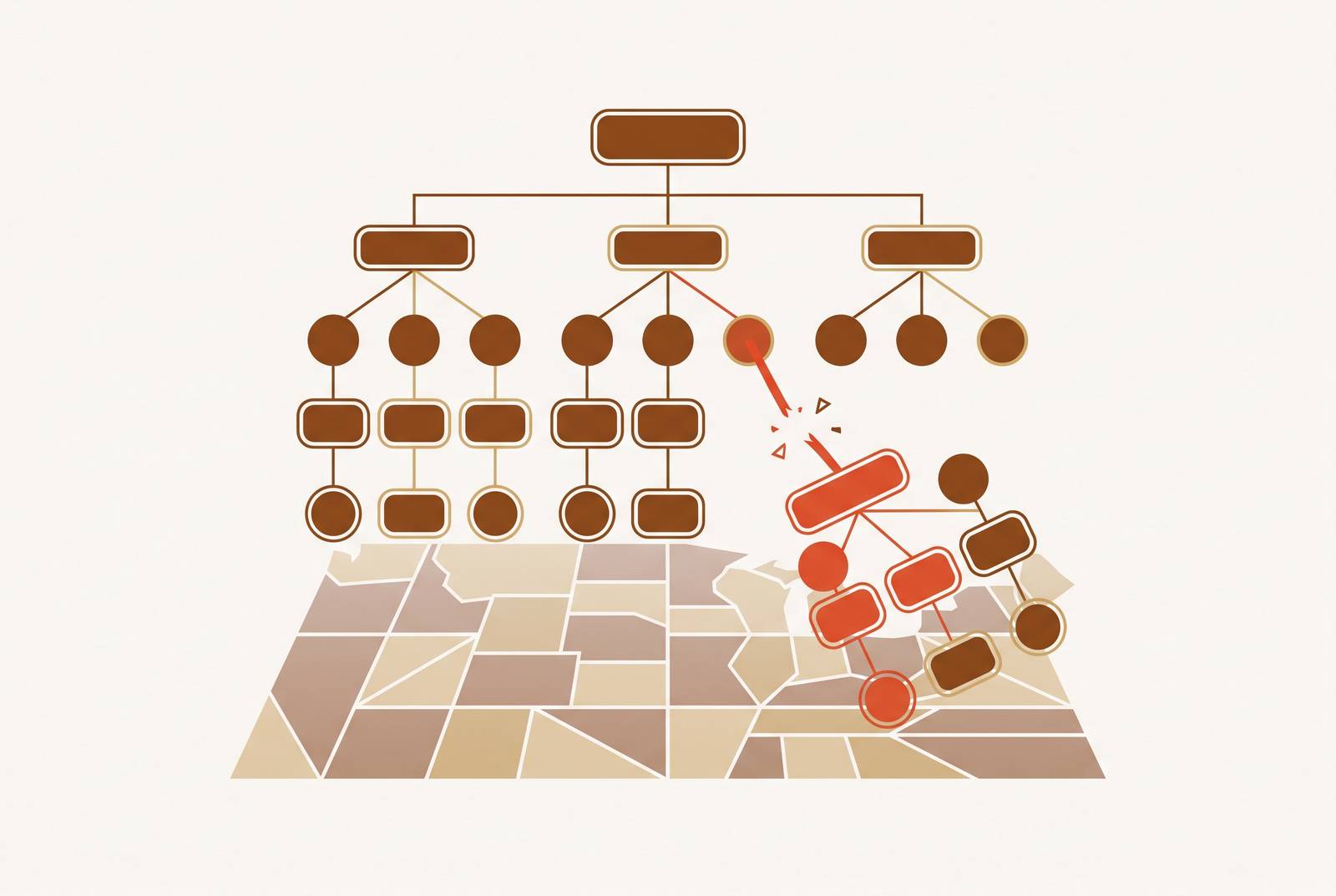
If you keep Salesforce account hierarchies clean over time, you have to treat parent-child links as a living structure that needs constant correction, not a setup task you finish once. You need to deduplicate and standardize records before any enrichment or matching runs, because matching engines link confidently to whichever duplicate they find first. From there, territory rules need to read clean fields instead of compensating for dirty ones, and re-parenting has to fire automatically on events like mergers or acquisitions, not wait for a quarterly review.
Why Salesforce Account Hierarchies Decay
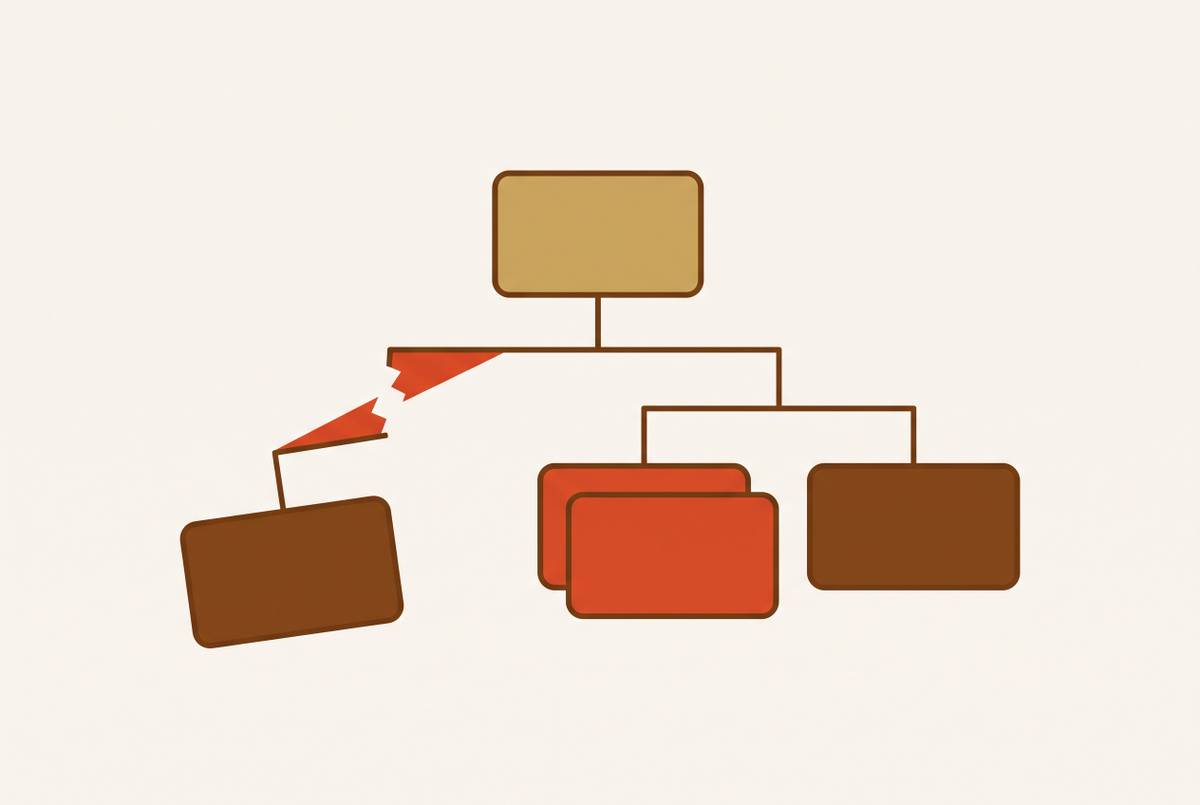
Account hierarchies in Salesforce break down on a schedule set by the business, not by the org's maintenance calendar. Mergers, rebrands, and internal restructuring happen constantly at any company with real scale, and each one puts pressure on the parent-child links, because Salesforce stores them as plain lookup values. A CRM has no sense of corporate reality beyond what someone tells it: when a rep creates a new subsidiary account and forgets to link it to its parent, that record becomes an orphan the moment it saves, cut off from the rest of its corporate family with no warning to anyone.
Scale makes this worse. When an acquisition closes, hundreds or thousands of records may need updating at once, and manual mass-updates run straight into Apex governor limits: CPU time caps, DML row limits, transactions that fail and roll back midway through. Splitting the work into smaller manual batches avoids the ceiling but introduces a new risk, since a partial failure in the middle of that sequence can leave the hierarchy half-updated and internally inconsistent.
The native architecture compounds the issue. If the Alphabet record goes missing or gets mis-linked, Google and YouTube show up in Salesforce as two unrelated accounts with no visible connection between them. Teams that try to patch this with Apex triggers that walk the account tree run into CPU time limits on large orgs, and when a Flow fails partway through a batch, the error logs tend to capture only one failed interview per batch of up to 200 records, leaving admins to guess at what actually broke. The hierarchy can look complete in the page layout while being structurally unreliable, and that unreliability is what makes territory assignment start to go wrong.
How a stale hierarchy corrupts territory assignment
Territory assignment rules just act on whatever account data exists at the time they run. When that data is stale, the rules still execute, and they produce wrong assignments with no indication that anything has gone wrong. Salesforce's own Sales Territories Implementation Guide for Winter '27 says territory assignment is logic applied directly to account fields, so the output can only be as good as the fields that feed it. Filter-based opportunity territory assignment runs as a scheduled job, not a real-time check, so if a hierarchy breaks between runs, it keeps generating mis-assigned opportunities until the next run catches up, and that can take days or weeks.
Three failure patterns occur once a hierarchy starts to decay. The first is whitespace blindness: assignment logic has no way to look upward and see who owns the global ultimate, so a high-value lead from a subsidiary falls into round-robin and lands with a random rep instead of the team that already covers the parent account. The third is coverage conflict, and Windstream Enterprise lived through a version of it after a run of acquisitions, when four or five reps would end up assigned to the same account family at once, creating internal friction, slowing deals down, and making the company look disorganized to the very customer it was trying to win.
Reporting breaks for the same structural reason that routing does. Because Parent Account is a lookup field rather than a master-detail relationship, native roll-up summary fields in Salesforce can't traverse it, so pipeline value and opportunity data stay locked at the individual account level. A territory manager reviewing coverage has no way to see total group revenue on the parent record, which makes it impossible to tell a genuinely small account apart from a small subsidiary of a major customer.
Buying Better Hierarchy Data Does Not Fix the Underlying Problem
When a hierarchy breaks, the first instinct is usually to buy better data. That instinct treats two separate things as one: hierarchy data, which is what vendors sell, and an account hierarchy, which is the live, queryable set of links inside Salesforce that automation and reporting actually depend on. Fixing the first does nothing for the second. A data feed can confirm that Alphabet is Google's ultimate parent, but that fact sits inert as a field value until someone builds the automation to populate the Parent Account field and actually connect the two records. Hierarchy data is the raw material; an account hierarchy is the structure someone still has to build out of it.
When the underlying records are already dirty, matching accuracy makes the problem worse, not better. A matching engine comparing incoming leads against existing accounts will link with full confidence to whichever duplicate it happens to find first, even when that duplicate is the wrong one. The sequence that actually works runs the other direction: deduplicate and standardize the records first, then run enrichment and matching against that clean foundation, not before it.
Teams shopping for a fix also tend to conflate three distinct categories of vendor, and that confusion leads them to buy the wrong tool for the problem in front of them. Matching engines can make those links more accurate, but a dirty record base underneath them still produces wrong matches. Automated hierarchy management tools are the only category built to handle the full cycle, detecting relationships, populating parent fields, and re-parenting accounts after mergers, which makes them the only option that closes the actual gap between owning hierarchy data and having a functioning hierarchy. Building this in-house runs into the same ceiling from a different direction: Apex triggers generally assume the Ultimate Account ID is already known when in real data it often isn't, merge events don't fire standard Flow triggers, circular reference prevention has to be written as custom logic, and CPU limits fail silently on deep account trees.
How stale hierarchy data breaks AI-driven GTM workflows specifically
AI agents inherit the exact state of the records they read, including every mistake in them. A wrong parent-child link doesn't just confuse one rep looking at one screen; the agent repeats it across every account it touches, as fast as the automation runs. Pipeline forecasting runs into the same blind spot, so it double-counts opportunities that actually belong to one parent account. Support routing fails in a quieter but equally costly way: a case lands with the regional team that covered a subsidiary's territory before an internal restructuring moved it elsewhere, because the territory assignment never caught up with the change.
Schneider Electric applied AI to hierarchy maintenance, and what that took shows what this requires at scale. A batch job flags accounts that need re-evaluation, and a second job generates hierarchy recommendations by querying an AI model alongside third-party corporate entity APIs. That process only works if the records going in are clean; a recommendation engine built on top of orphaned accounts and stale segments produces recommendations with the same errors baked in.
Who owns the AI effort matters as much as the tooling itself. Assigning AI ownership to RevOps, the team that already owns the systems, the data flow, and the operational efficiency metrics tied to them, tends to produce better outcomes than scattering ownership elsewhere, because RevOps is positioned to enforce the data standards the AI depends on to function. When organizations struggle to move AI projects out of the prototype stage, a data quality problem is usually the real cause. Models are often ready before the data infrastructure feeding them is.
What a reliable hierarchy architecture requires in Salesforce
A durable hierarchy keeps three things separate that get conflated constantly: the corporate ownership structure, the commercial coverage model, and the territory assignment logic that routes work based on both. Each needs its own modeling and its own maintenance path, because collapsing them into a single structure is what makes the whole thing fragile.
The first structural decision is whether coverage ties to people or to territories. An owner-centric model attaches accounts directly to individual reps. Every personnel change forces account-level record updates across however many accounts that rep owned, and it makes historical books of business difficult to reconstruct later. A territory-based model, built through a dedicated territory management capability, separates the durable coverage structure from the individual reps serving it, so a personnel change only updates one territory assignment. Data cleansing belongs outside the territory assignment engine entirely: the assignment rules should read fields that are already clean and standardized, rather than carrying complex logic whose job is to work around dirty data.
The second decision is how the Ultimate Parent gets stamped onto child records. Apex triggers that walk the account tree to find the root are more reliable than shortcuts, but they run into SOQL query limits inside loops, and you need to deliberately handle merge events, since account merges don't fire standard Flow triggers the way other updates do. Circular reference prevention, merge handling, and re-parenting logic all have to be designed on purpose; none of them works by default. This only holds together if you get accuracy at every link in the chain. A single incorrect or missing parent-child connection breaks the entire hierarchy. The standard for "correct" has to apply uniformly across every level, not just at the top of the tree where people tend to look first.
The data quality foundation that territory logic must be built on
A territory assignment engine only performs as well as the account fields feeding it, so data quality needs to stay an ongoing operational requirement, not something you configure once and leave alone. Five field-level failures account for most of the damage. Missing required fields, whether that's country, industry code, or revenue, strip out a dimension the assignment rules were counting on.
Catching these problems requires watching the fields themselves, not just scanning records for completeness after the fact. Null rate monitoring on the Parent Account field identifies orphaned subsidiaries before they ever reach a wrong territory assignment. Lineage tracing ties a specific mis-assignment back to the exact field change or missing link that caused it, which matters because it lets ops teams investigate the actual cause the first time. The usual objection to this level of monitoring is that it adds overhead, but reactive cleanup after a territory conflict has already cost deal time and coverage trust, which is a more expensive fix than catching the broken link before the assignment job ever runs.
How continuous automated maintenance replaces reactive cleanup
Quarterly cleanup projects can't keep pace with how fast hierarchy data decays. By the time a mis-assignment appears as a territory conflict or a coverage dispute between reps, the stale link behind it has already been corrupting routing, rollup reports, and any AI workflow reading those accounts for weeks or months.
The sequence that holds up is detection before assignment runs, not triage after something has already failed. You need to match enrichment data against records that are already deduplicated and clean, not against whatever Salesforce happens to contain at that moment, because if the base is dirty, the matching engine will link incoming leads to the wrong duplicate with total confidence. Re-parenting has to trigger off real events: an M&A announcement, an enrichment update, a rep flagging a change. And changes need to propagate down the hierarchy on their own: updating a global ultimate's segment or owner shouldn't require someone manually opening every child account to copy the change over.
Continuous maintenance governance keeps two concerns separate that get blurred together too often. Territory design covers the criteria for a viable territory, how accounts get balanced across reps, and which accounts stay locked in place, and it belongs in a planning process with stakeholder sign-off. Territory maintenance means you keep the account fields those rules read accurate day to day, and that job belongs to an automated data quality layer running continuously between enrichment events and assignment job runs. Detecting these breaks as they happen, and fixing them continuously rather than waiting for a quarterly cleanup cycle, requires monitoring that can spot orphaned records, broken links, and stale relationships in real time. Quill, which builds AI agents specifically for systems of record, applies that kind of continuous cadence to account hierarchy maintenance by surfacing and proposing fixes for the structural decay that manual processes can't keep up with, detecting duplicate accounts, subsidiaries with no parent, and missing fields, then applying corrections as autonomously as the team allows.
You can catch a hierarchy break before it corrupts downstream logic only if detection happens proactively, before alerts show up after the damage is done. If a territory manager has to notice that assignments have already gone sideways, the cost has already been paid, but an AI-powered platform that continuously watches parent-child relationships can flag the inconsistency the moment it appears, so a team can fix the data before it poisons territory logic downstream.