Why CRM Data Degrades and the Operational Debt It Leaves Behind
Four structural forces degrade CRM data faster than cleanup can repair it.
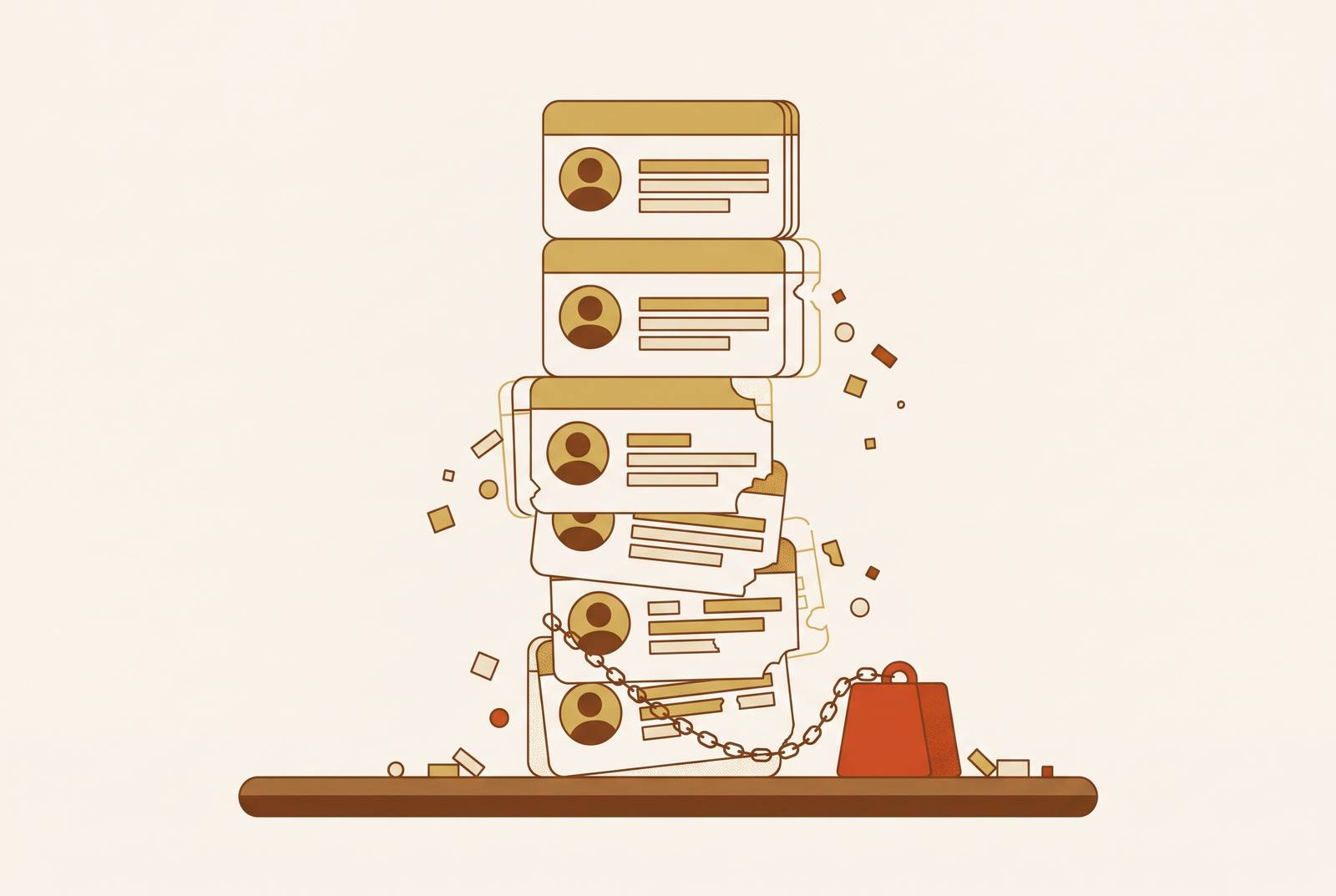
CRM hygiene is the ongoing work of making sure customer and prospect records are accurate, complete, consistent, and free of duplicates. CRM data degrades through role changes, acquisitions, manual entry failures, and integration drift, leaving operational debt in sales, marketing, and RevOps. Keeping it clean requires explicit ownership, input controls, enrichment, and deduplication backed by detection and remediation that continue between periodic cleanups.
CRM data degrades through four structural forces, not random entropy
A champion leaves a company, but their contact record still shows the same title, employer, and buying role. This is role churn, a change in the person’s real position that the CRM does not automatically reflect. Job title and function changes are the largest driver of B2B data decay. The record can still look perfectly complete. When correction depends on a rep discovering the departure, weeks or months of outreach can pass before the database catches up.
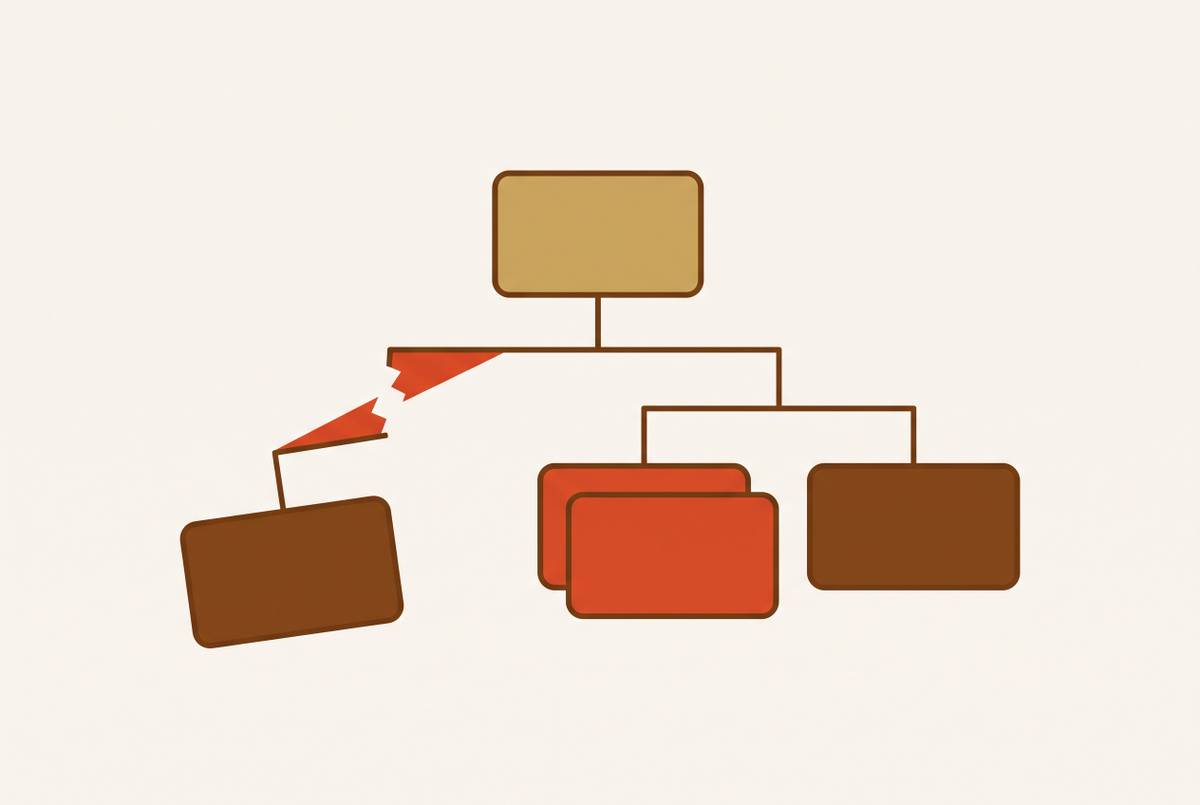
An acquired company’s account remains open as though the business were still independent. Unlike a single contact’s departure, an acquisition changes the relationships between companies and the people attached to them. Contacts remain mapped to defunct entities, while firmographic data and account hierarchies describe an organization that no longer exists in that form. These are ghost accounts. The acquisition changes reality without reconciling the vendor’s CRM.
A rep types “N/A” into every required field after a call, satisfying the form without supplying useful information. This is manual entry failure, which also enters through unvalidated web forms and spreadsheet imports with inconsistent formats. Corruption begins at ingestion, before the data has time to grow old. A required field is therefore not necessarily a reliable field.
Integration drift occurs as pipelines change, mappings fail, and duplicate identities reappear across connected systems. When enrichment sources disagree, last-write-wins logic can replace a sound value with an incorrect one simply because it arrived later. Without a way to reconcile conflicting values, integrations can undermine the single source of truth they are intended to support.
Why decay is not linear: the compounding logic that turns small errors into database-wide rot
The four forces compound because each can expand the reach of another. When a contact changes employers, a new record may be created while the old record remains unchanged. Role churn has now produced identity fragmentation. The same person appears under multiple profiles, and personalization can use an outdated employer or title across them. Correcting the job title on one record does not resolve the duplicate identity.
An acquisition creates a broader version of this interaction. It can simultaneously orphan contacts, break account hierarchies, and invalidate territory assignments without triggering an alert in the CRM. A contact can be accurate at the field level yet still belong to the wrong account hierarchy, which makes the record unreliable for routing and account planning.
Weak input controls allow these errors to persist. Placeholder entries and inconsistent formats reduce the reliability of the fields that teams need to distinguish identities and recognize anomalies. Integration drift then adds values that disagree to a record that is already hard to trust. The damage spreads from the field where it began through the links between records and workflows.
This is why natural changes, mechanical failures, and governance failures cannot be addressed independently. Fixing an import does not track a champion’s departure, while updating that champion does not repair a broken synchronization. A cleanup removes errors accumulated to that point. It does not stop the interacting forces that created them, so the database can begin degrading again before the next review arrives.
What compounding decay actually costs: the operational debt that lands on revenue teams
Operational debt is the recurring work and revenue exposure created when unresolved data errors enter daily decisions. For sellers, that debt appears as calls to wrong numbers, time spent verifying employment, and updates that should already have been reflected in the record. Every failed lookup interrupts selling work. Across a team, the cost is not just the original mistake but the repeated effort required to discover and work around it.
Pipeline reports absorb a different part of the debt. Opportunities can remain in advanced stages after negotiations have stalled or key stakeholders have departed, creating phantom pipeline. The forecast then reflects the apparent activity of records, misrepresenting the state of the deal. At quarter-end, leadership must sort real opportunities from those that look further along because their records are out of date. Even after the contact is cleaned, the forecast can still be in doubt.
Duplicates inflate apparent audience size while concentrating spend on fewer unique contacts. Stale email addresses cause sequences to bounce and harm domain reputation, so even valid emails can land in spam. A decayed portion of the database can therefore reduce the effectiveness of outreach to the accurate portion.
An enterprise prospect can be assigned to a junior rep because the employee count field defaults to a lower tier. Reassignment takes time, allowing competitors to engage first and weakening buyer trust in the handoff. These costs recur because the underlying records remain inputs to future decisions. Operational debt is therefore an ongoing obligation.
How RevOps absorbs the debt and why governance alone cannot discharge it
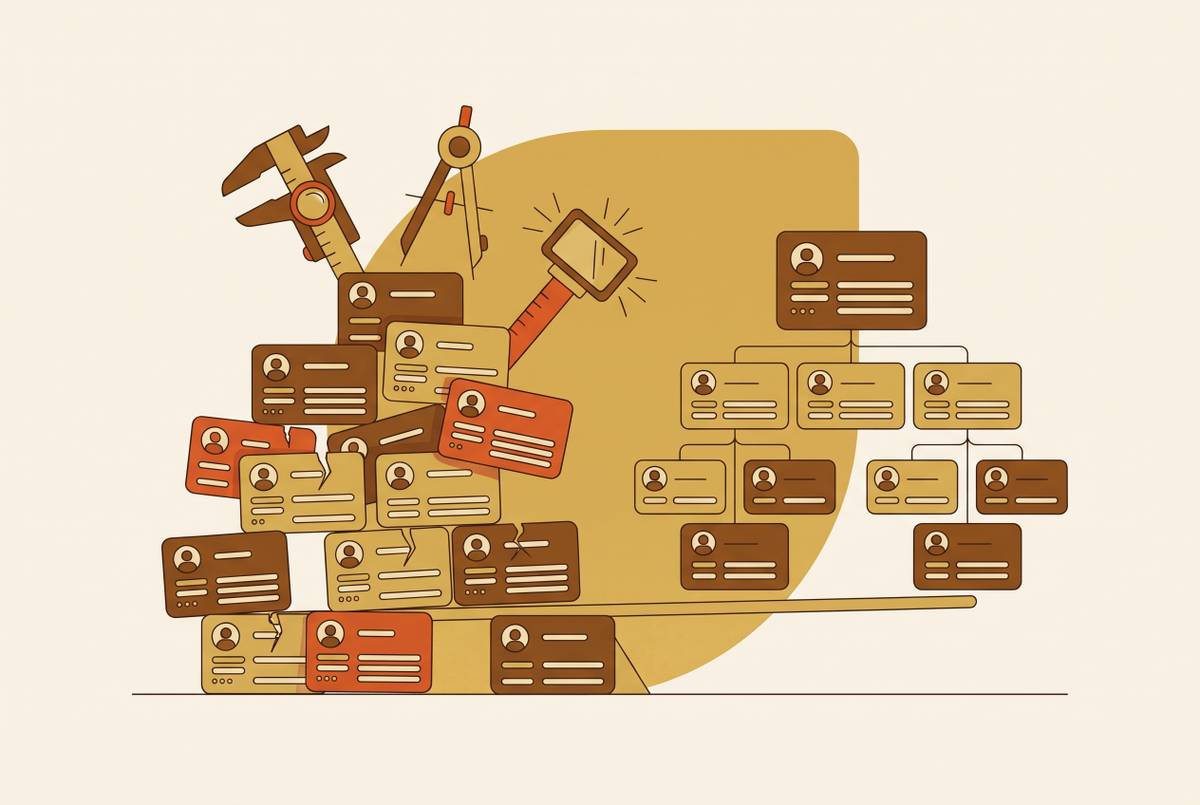
RevOps becomes the point where these consequences converge. The function should own go-to-market design, forecast integrity, and territory productivity, yet missing close dates, duplicate contacts, and sync failures compete for the same team’s attention. Maintenance displaces strategic work. This work falls to the team because of how the system is set up, with ownership spread across teams, people entering data in different ways, and integrations changing without shared controls.
Unclear ownership makes the displacement harder to reverse. Reps can recognize unreliable records well before leadership discovers the problem in a pipeline report. As reps lose trust, they have less reason to take care with data entry, so the records get worse. The system starts reinforcing its own weakness. A policy asking everyone to maintain accurate data does not resolve who has the authority and capacity to correct cross-system failures.
Governance is still needed because field controls and central oversight set the standards that data must meet. Enforcement requires more than a document, however. Validation rules can constrain incoming values, but they do not by themselves detect that a person has left or that an account has been acquired. Nor can a cleanup sprint continuously reconcile the systems that feed the CRM.
Manual cleanup addresses the accumulated stock of bad records. A database cleaned in Q1 can be meaningfully degraded again by Q3 without ongoing automated monitoring. When after-the-fact updates compete with quota-bearing work, governance that depends on rep compliance remains fragile, creating a systems problem. Adding AI to that system increases the speed at which unresolved errors become operational decisions.
Why deploying AI on a decayed CRM does not fix the debt — it multiplies it
AI agents and scoring models use CRM records as inputs. Incorrect industry codes, outdated titles, and duplicates therefore enter the same processes intended to improve prioritization, outreach, forecasting, and segmentation. Automation can convert those inputs into confidently wrong outputs at a speed and scale that human review cannot readily match.
The failures follow directly from the input layer. Lead scoring trained on dirty data can send sellers toward the wrong accounts, while an outreach agent can name a former employer in its first sentence. Duplicate-filled historical data can distort predictive forecasts, and stale firmographics can group companies that do not share the characteristics a campaign assumes. Each output can look operationally valid. The score exists, the email sends, and the forecast completes even though the underlying decision is unsound.
ADE-PRF’s July 2026 research on multi-agent system reliability identifies a “false prosperity” phenomenon in which significant degradation occurs while external metrics remain deceptively normal. Applied to CRM-fed AI, this offers an analytical parallel rather than a CRM-specific finding. Records can exist, fields can be populated, and workflows can fire while the decisions they support become less reliable. Apparent activity can conceal worsening quality. Because the system seems to be working, there may be no obvious reason to investigate.
The debt also becomes harder to unwind. Errors propagate from the database through scoring models, outreach sequences, routing rules, and forecast rollups. Correcting a record does not by itself retrace the decisions already made from it. Clean data in the system of record is therefore a prerequisite for dependable AI deployment.
Why the debt requires continuous, autonomous monitoring rather than periodic cleanup or passive alerting
Quarterly or monthly refreshes leave intervals in which role changes, integration failures, and conflicting updates can accumulate and interact. A shorter cleanup cadence reduces the interval but preserves the same basic mismatch. The process still waits for a scheduled fix while the causes keep running.
An alert that identifies a stale record still requires someone to triage it, judge the correction, and execute the change. Awareness has improved, but action capacity has not. If the queue grows faster than the team can resolve it, the errors remain available to downstream workflows.
Continuous autonomous monitoring changes the relationship between detection and correction. It finds duplicates, missing fields, and inconsistencies as they appear, then proposes and applies evidence-based fixes without waiting for a human triage queue. The evidence requirement is essential to the distinction. Automation that merely overwrites one conflicting value with another reproduces integration drift.
A dashboard surfaces an issue, while an agentic quality layer finds it, grounds a correction in evidence, and applies the correction. This follows the DataOps principle that quality controls belong inside the workflow. Governance supplies the standards for reliable records. Continuous remediation supplies the capacity to uphold those standards as the records and their sources change.
How do teams keep CRM data clean and accurate while building toward continuous monitoring?
While building toward that architecture, teams should reduce both the stock of existing errors and the flow of new ones. The first step is explicit ownership, with a named owner whose scope and authority cover CRM hygiene. Shared responsibility is not a substitute for that assignment. Field controls, validation rules, and consistent ways of entering data can then help prevent corruption at ingestion, while oversight deals with changes to the systems that feed the CRM.
Existing records need enrichment and deduplication together. No single enrichment provider covers every company, contact, and geography, so multi-source enrichment fills gaps left by one source. Yet adding sources without reconciling disagreements can create more drift. The correction process must distinguish useful evidence from whichever value arrived last, rather than treating freshness alone as proof of accuracy.
For duplicate contacts, automated deduplication should combine deletion with enrichment and ongoing monitoring. A role change can leave one person represented by both an old employment record and a new profile. To fix that fragmentation, teams need to check who the person is and which company they now belong to, along with the repeated fields. Prevention must accompany removal. Otherwise, the integrations and entry practices that created the duplicates can recreate them after the cleanup.
A quarterly hygiene cadence can still help keep data clean when it is used with the rest of this approach. Teams should also treat role changes as pipeline signals, since a champion’s move can be both a decay event and a new opportunity. Routing that signal correctly moves it out of a cleanup queue and connects data maintenance to revenue work. Manual fixes are a starting point. The debt is payable only when CRM hygiene stops being a periodic project and becomes an operational system.