The Data Reliability Case for Auditing Duplicate Accounts and Broken Hierarchies Before They Compound
Fixing duplicate accounts now prevents errors from cascading through sales and AI.
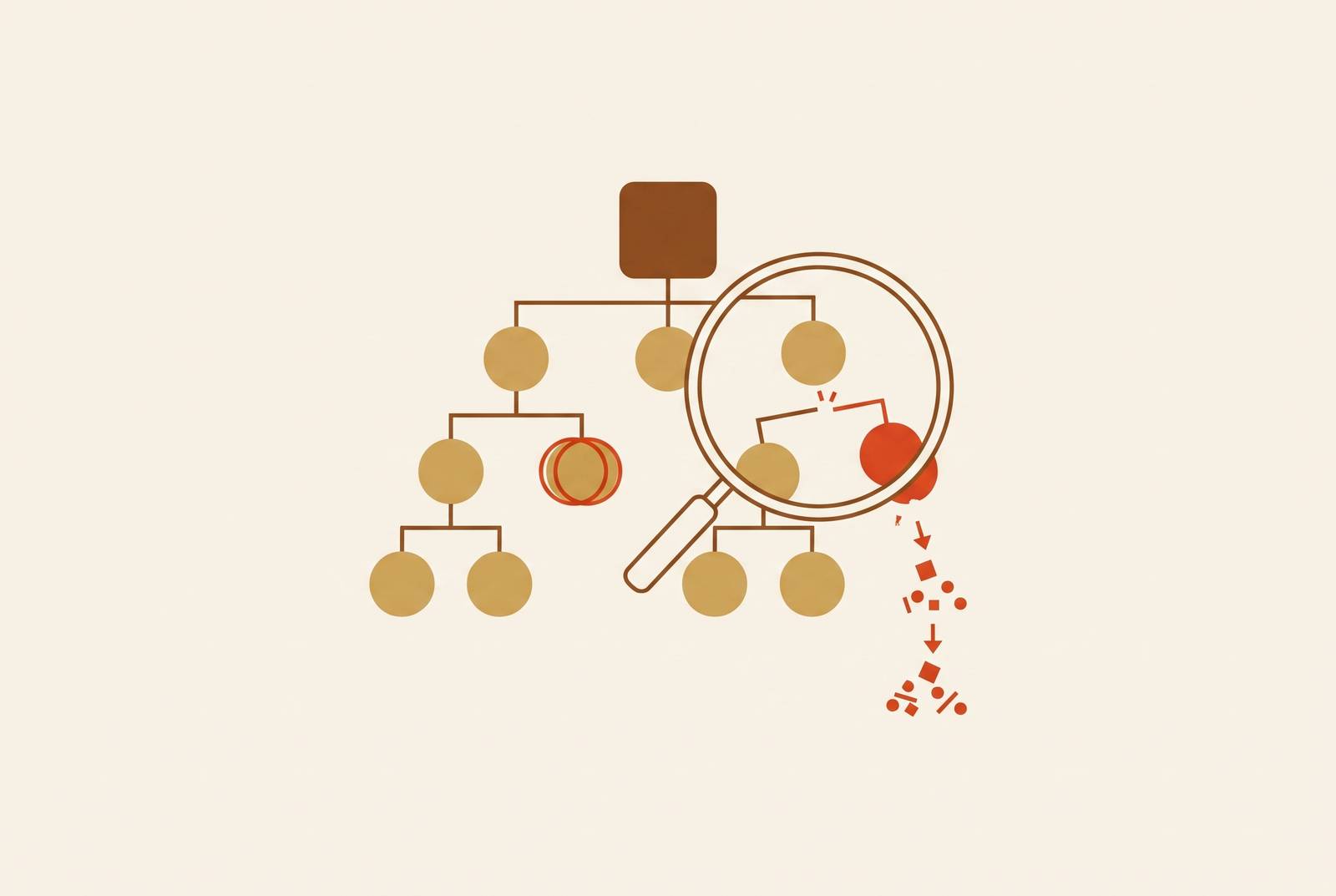
CRM hygiene is the ongoing work of keeping CRM records accurate, complete, deduplicated, and correctly linked. Auditing duplicate accounts and broken hierarchies before they compound protects more than record quality. It prevents structural errors from spreading into sales activity, territory assignments, forecasts, and AI outputs. Reliable CRM hygiene therefore needs an audit of the account structure at the start and checks that keep running between cleanups.
Why duplicate accounts and broken hierarchies are a structural problem, not a cleanup task
Duplicate accounts often look like routine data messiness. Two records describe the same company, or a subsidiary lacks a parent account. These records are the foundation for activity histories, ownership assignments, enrichment, and reporting. When that foundation is wrong, each process built on it can extend the error into another part of the revenue operation.
The entry points explain why this is systemic. Reps create accounts on their own, form submissions skip matching logic, and list imports come in without deduplication checks. CRM migrations introduce another channel when they fail to reconcile incoming records with existing ones. These channels compound one another. A team can correct records from one import while another integration continues to introduce duplicates.
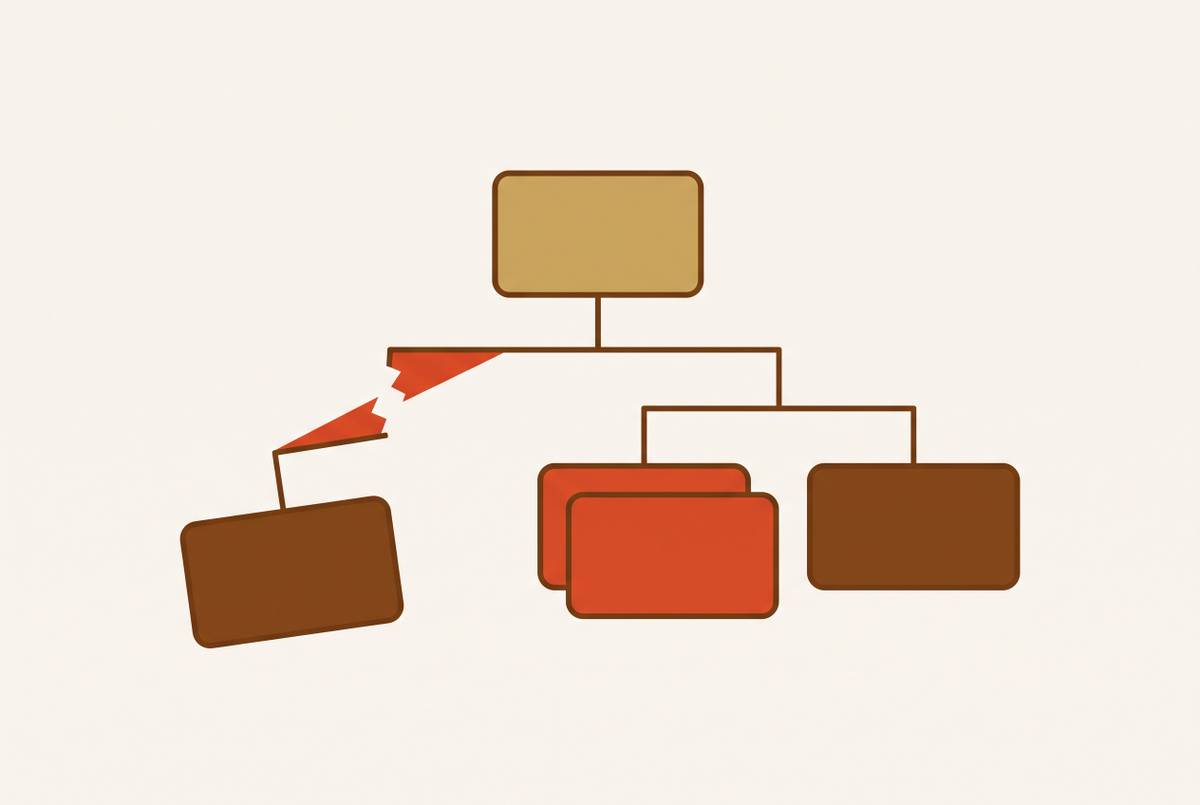
Broken hierarchies create a different kind of failure. Most Salesforce account hierarchies organize parents and subsidiaries around static legal ownership data, but legal structure does not fully describe how go-to-market teams sell. Acquired brands and buying centers can fall outside the relationships visible to reps. An account may therefore have correct fields but sit in the wrong place in the enterprise relationship. Field-level cleanup cannot repair that structural defect.
How B2B data decay turns a manageable error count into an accelerating problem
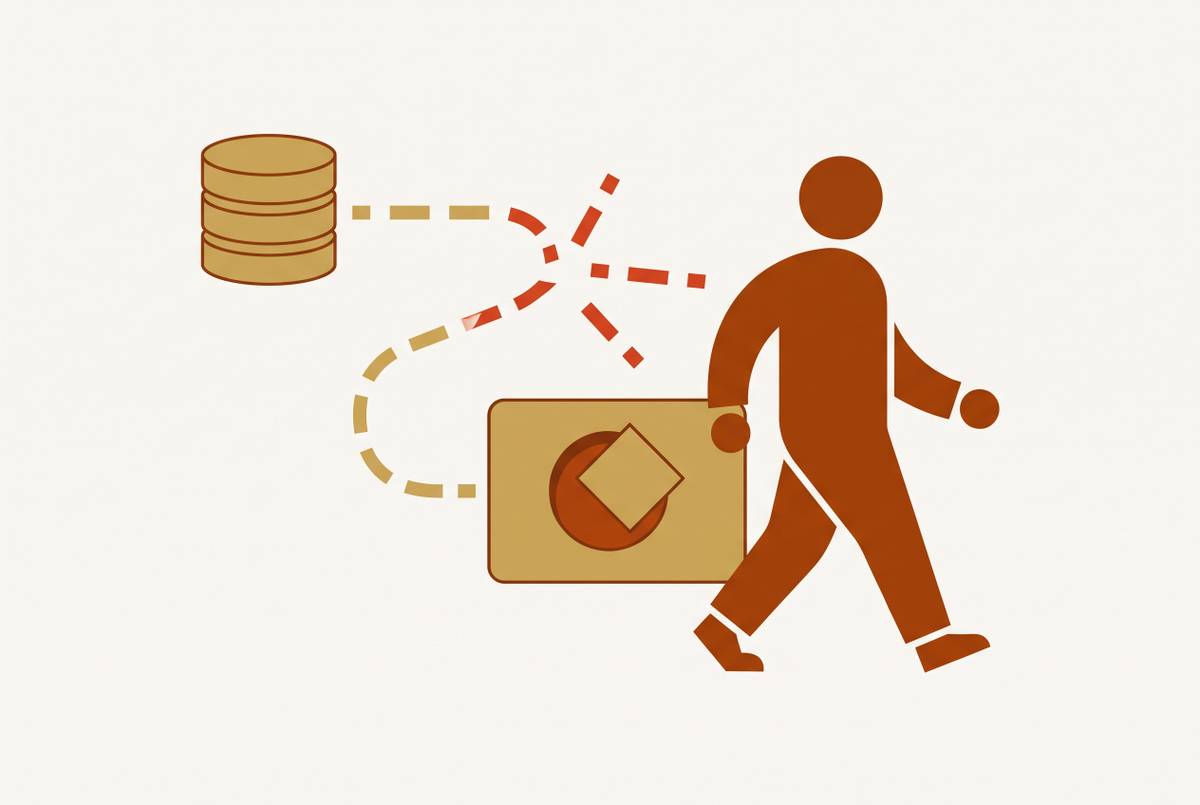
Even without another faulty import, the CRM does not stand still. People change jobs, companies buy businesses, and the ways they work together change. A record that accurately described an account or contact at creation can become misleading without anyone editing it. Time changes the underlying facts the record represents. Existing duplicates and missing relationships become harder to reconcile as their fields drift apart.
Job movement illustrates this continuing pressure on contact accuracy. A government statistical agency’s 2024 report on tenure said median employee tenure was 3.9 years, the lowest since January 2002. That historical measure shows why employment relationships cannot be treated as permanent. Mergers and acquisitions can change the facts about accounts in much the same way. Errors made when entering data by hand and a lack of governance add to the strain as those outside changes continue.
The resulting growth is asymmetric. A duplicate created today can become the parent record for enrichment, scoring, automation, and reporting tomorrow. Each downstream process then works from the mistaken account structure and can extend its consequences. The number of original errors may stay the same even as they affect more records and decisions. Waiting therefore leaves more to fix, even when a dashboard shows no clear jump in duplicates.
The specific ways a single duplicate account corrupts records, reporting, and territory logic
Consider an account represented by two CRM records. A rep logs meetings and notes against one, while another works from the other. Neither version presents the full activity history. The customer story fragments at the point where the team expects to find it. Reps can consequently call the same account without knowing that a colleague has already engaged it, even if both follow the expected process.
Ownership conflicts make that fragmentation operationally harder to resolve. When the duplicate records have different owners, territory logic treats the same underlying account as separate assignments. Routing can send work to multiple reps, while each sees a record that supports their claim. The disagreement appears to be about territory boundaries. Its source is the system’s failure to represent one account as one account.
Reporting inherits the same split identity. Duplicate accounts can inflate pipeline figures and distort reports that rely on account-level grouping. A report works from the records it receives, including their conflicting ownership and divided histories. Revenue teams then lose selling time to reconciling versions, recovering context, and resolving assignments.
This is why counting duplicate rows alone understates the workload. The repair must account for what has accumulated around those rows, including interactions, notes, meetings, and ownership conflicts. The longer both versions remain active, the more context the cleanup must reconcile.
How broken account hierarchies hide revenue opportunity and misdirect go-to-market effort
Hierarchy failures distort the relationships between accounts that may each be legitimate. A subsidiary and its parent are not duplicates simply because they belong to the same enterprise. Both may need distinct records, but the connection between them must remain visible. Without it, reps cannot see what parent or sibling accounts are doing.
Tax or incorporation relationships show how a company is structured, while buying across the enterprise can involve semi-independent subsidiaries, acquired brands, and buying centers. Reps managing one part of the enterprise may have no view of the broader customer relationship. Roll-up reporting then fails to expose the connections needed for coordinated account planning.
Mergers and acquisitions are a particularly silent accelerant. When Company A acquires Company B, the CRM does not automatically merge accounts, reconcile duplicate contacts, or update firmographic data. Companies that have been acquired can stay orphaned long after the deal closes. Contacts stay mapped to defunct entities, while account relationships preserve a structure that no longer exists. The records may still look normal when checked one at a time.
That invisibility redirects go-to-market effort away from real opportunities. Reps may prospect into a subsidiary without knowing a competitor already owns the parent relationship, or approach an existing customer as a new account under another name. Meanwhile, subsidiaries of known customers that have never bought anything stay out of view when teams plan where to expand. Finding that whitespace requires a functioning hierarchy.
Why feeding AI on duplicated and structurally broken CRM data produces confident wrong outputs at scale
AI tools work from the account structure they are given. An AI SDR reading a stale contact record can send outreach to someone who left the company months ago. A scoring model that uses old firmographics from duplicate or ghost accounts can rank businesses that no longer fit the ideal customer profile. Automated routing can assign the same account to multiple reps because its duplicate versions name different owners. These are specific failures of input reliability.
Forecasting extends the problem into leadership decisions. When pipeline figures are inflated by duplicates, models using those figures can produce revenue projections that do not correspond to real opportunity. The output can look precise and arrive quickly. Neither quality establishes that the underlying opportunity exists. Automation increases the rate at which the mistaken representation becomes a decision.
The strongest objection is that AI enrichment might clean the data while processing it. However, enrichment does not by itself resolve whether two accounts represent one company or whether a subsidiary belongs under a different parent. Adding information to the wrong structural record leaves the relationship wrong. Stale and duplicated records also supply misleading training signals, regardless of model sophistication. Teams need to establish the RevOps foundation before using AI to accelerate work built on it.
Why the cost of these problems is systematically underestimated and undertracked
The cost usually appears far from its origin. Lost deals, failed campaigns, wasted rep hours, and forecasts that cannot be trusted affect different teams and their budgets. None necessarily appears under a line labeled data quality cost. That separation makes structural failures difficult to price and easy to defer. An organization can absorb the consequences without recognizing that they share a cause.
Widely cited estimates still deserve careful qualification. Gartner’s $12.9 million figure for yearly costs covers data quality as a whole, without a separate figure for duplicate accounts or broken hierarchies. Its respondents were a self-selected group of organizations already purchasing data quality software, and the costs were their own estimates. Those organizations already recognized the problem and had incentives to estimate it generously. The figure should not be treated as a universal forecast of duplicate-account losses.
Validity’s research found that roughly a third of CRM users reported losing revenue attributable to poor data quality. Those responses establish a reported revenue effect, but they remain respondents’ estimates of damage they could identify. They do not measure every missed expansion opportunity or every decision shaped by an incomplete hierarchy. Visible losses are only the costs respondents could attribute. Untracked losses cannot be assumed away because attribution is difficult.
The practical implication is not to wait for a perfect cost model. If an organization cannot see the damage accumulating, it cannot reliably schedule an audit just before the damage becomes expensive. Monitoring must catch errors in the account structure before they reduce revenue.
What a pre-compounding audit actually covers and how early detection changes the cost curve
For teams acting on this diagnosis, the audit starts with identity across CRM objects. It examines email, phone, company name, and domain matching across contacts, accounts, leads, and opportunities. Teams need to remove duplicate contacts as part of that wider audit. The audit also identifies ghost accounts that remain active despite no longer existing as operating companies and examines the structure around apparent matches.
Interactions, meetings, and notes distributed across duplicate account versions reveal how much customer context has fragmented. Conflicting owners show where the same identity problem has entered territory logic. These are repair requirements. They distinguish a coherent merge from a cleanup that leaves the account’s operational history unresolved.
The hierarchy audit then examines parent-child linkage completeness. It identifies subsidiaries without connected parents and acquired entities still mapped to defunct structures. M&A reconciliation checks accounts created during acquisitions that were never matched to existing CRM records. Whitespace identification examines subsidiaries of known customers with no opportunity or activity attached.
The sequence runs through five phases, beginning with documented data standards, followed by duplicate identification and merging, contact-field validation and standardization, entry prevention, and ongoing monitoring. Existing errors need repair, while new errors need interception. Fuzzy matching before records are written, validation rules at creation, and deduplication checks in forms and API integrations provide that control. The financial services case in the brief links creation-time validation to a sharply reduced duplicate rate over six months and restored sales-team trust. Early detection changes the cost curve because fewer downstream records and decisions need correction.
How do you keep CRM data clean and accurate over time through continuous monitoring?
A periodic audit captures a moving problem at one moment. Between audits, people can change jobs, companies can be acquired, faulty imports can arrive, and people can create records that conflict. Continuous monitoring addresses that interval directly. It moves detection closer to the point where an error would otherwise begin to propagate.
At record creation, duplicate detection can intervene before a new account feeds enrichment, scoring, and routing. Hierarchy monitoring flags M&A-driven breakage rather than waiting for a rep to discover an orphaned account. Anomaly detection establishes baselines for normal account structure and identifies deviations, including missing parent links, sudden duplicate clusters from imports, and inconsistent fields across related accounts. These controls cover different failure paths.
The architecture also needs a defined owner for CRM hygiene. Without ownership, validation rules, decay monitoring, and an enrichment cadence, responsibility remains diffuse. Data teams then discover failures through broken dashboards, degraded AI outputs, or a disputed pipeline report. With human-reviewed alerts alone, fixes still have to wait for someone to work through the backlog. Agentic data reliability fits here as a system that continuously monitors, detects, and proposes fixes.
The strategic outcome is renewed trust in the CRM. When records and relationships are monitored and corrected continuously, reps can rely on account histories, forecasts can reflect real opportunities, and AI tools can work from dependable inputs. The durable commitment is to make data quality resilient and repeatable, with structural controls that keep pace with the changes they must catch.